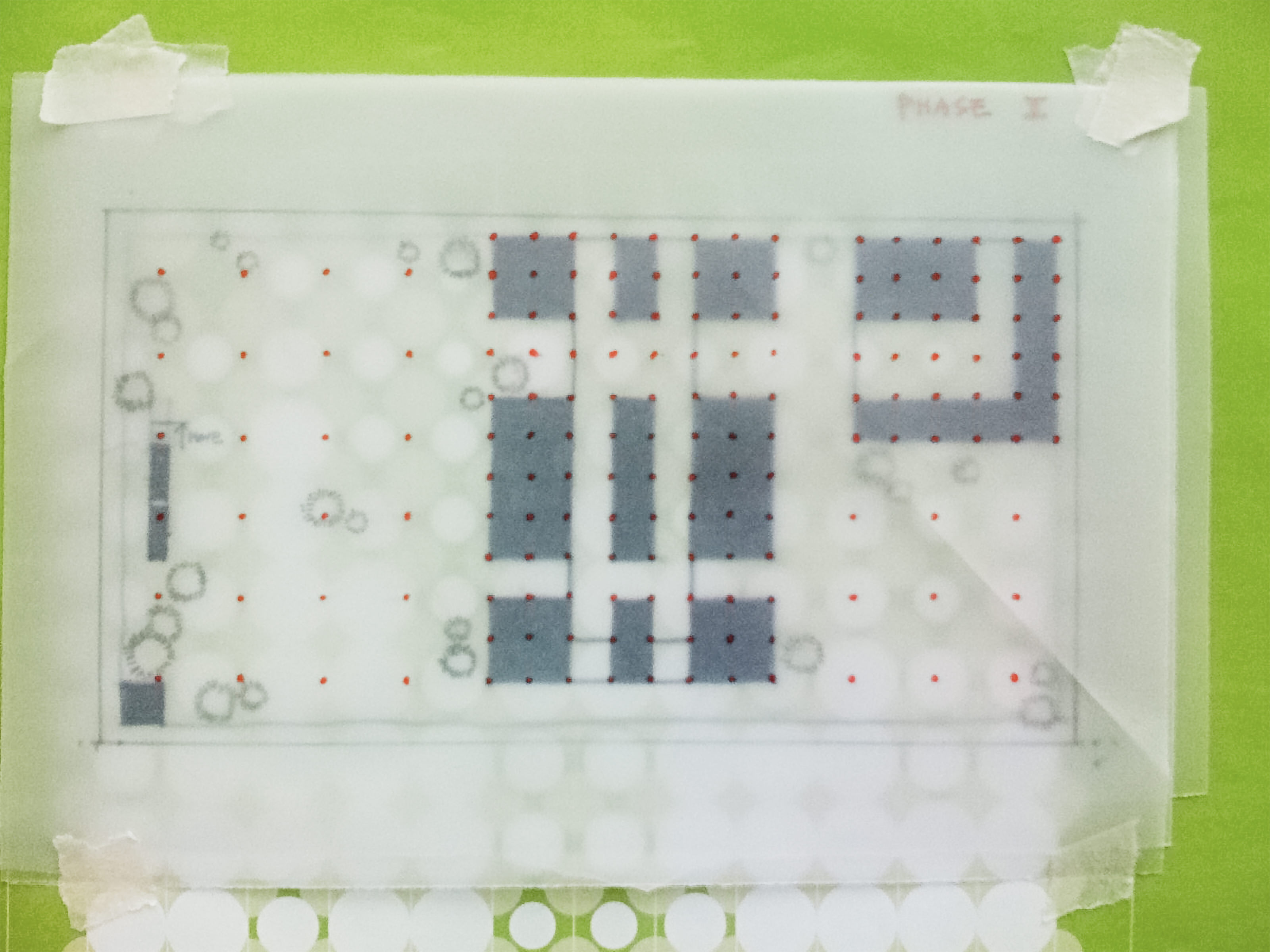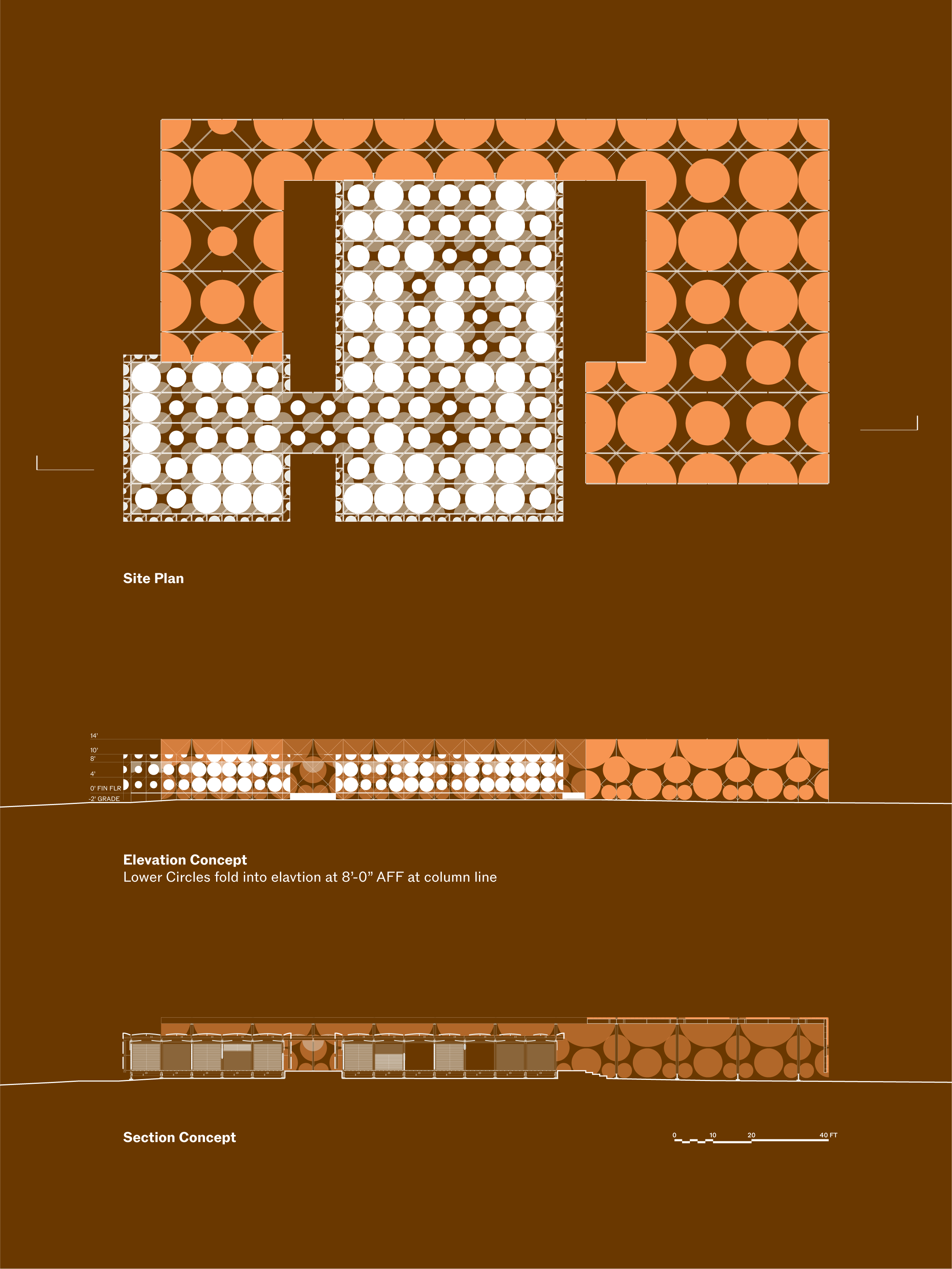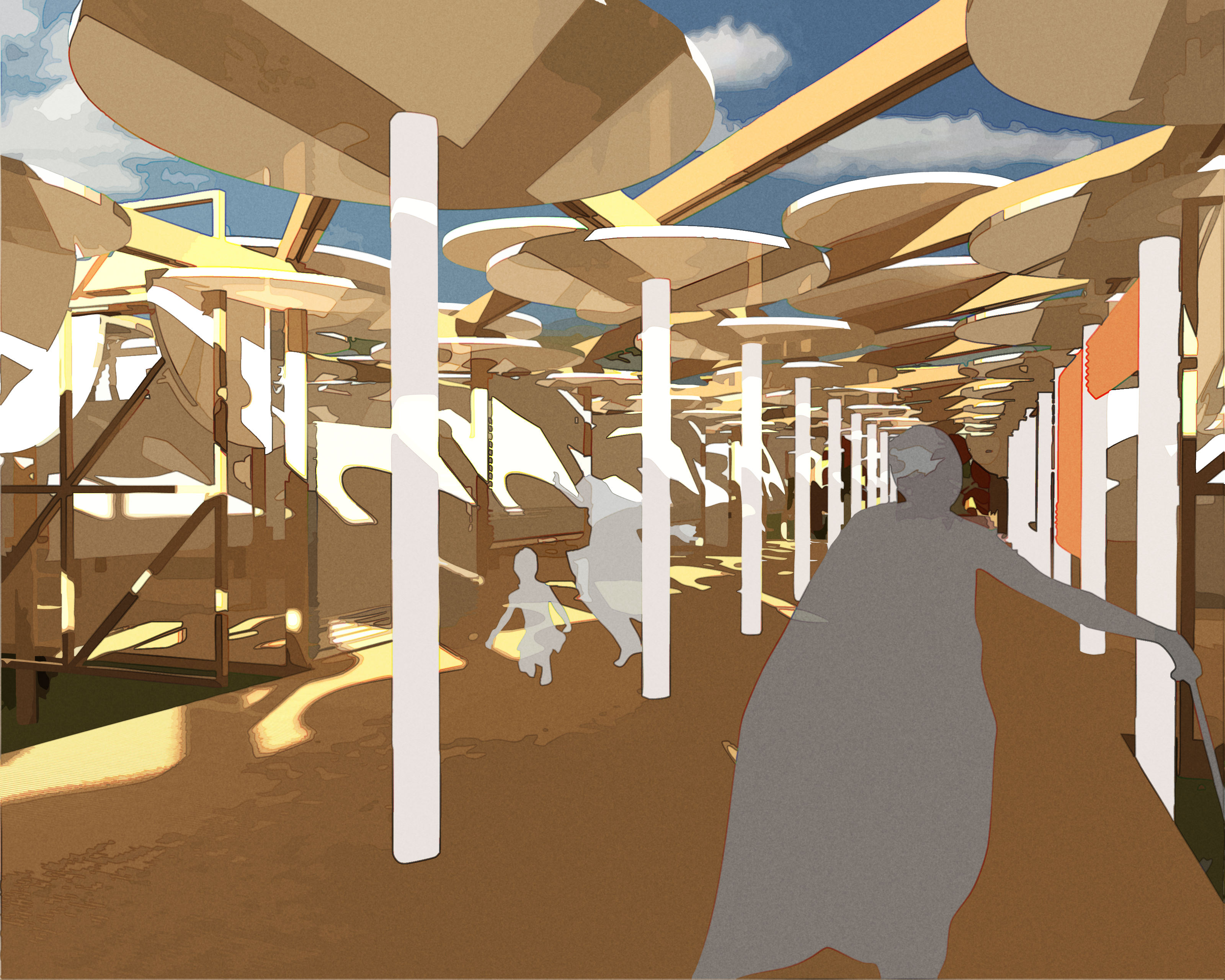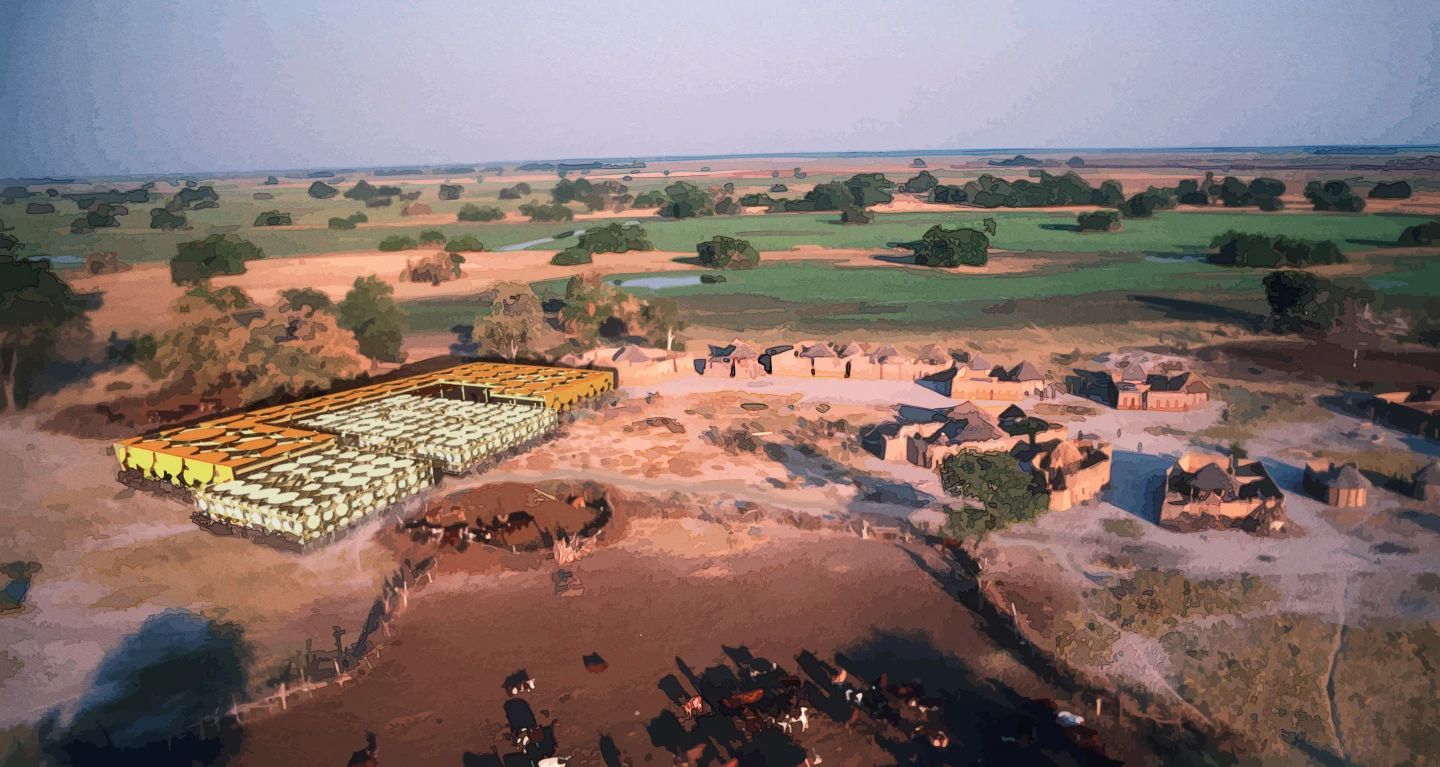
Childrens Care Village is a competition entry that explores the potential for architecture to be a catalyst for confidence, safety, and learning for children with limited access to basic healthcare. The programming is designed to integrate seamlessly into the landscape, utilizing intuitive and lightweight construction methodologies, and extend basic community-oriented services. The clinic serves as a physical and social anchor in areas where infrastructure is limited, extending its role beyond treatment to support broader community well-being. The design strengthens ties between rural African communities and a larger global care network, embedding access into the built environment. Mass-market and low-cost materials, including industrial cardboard tube profiles and exterior-grade textiles, are repurposed into a flexible, modular system that can adapt to varied conditions. Standardization supports efficient construction, while the spatial language is open and oriented toward the inquisitive experience of children. Small variations in enclosure calibrate moments of personal connectivity to nature and community, creating spaces that feel both protected and expansive.
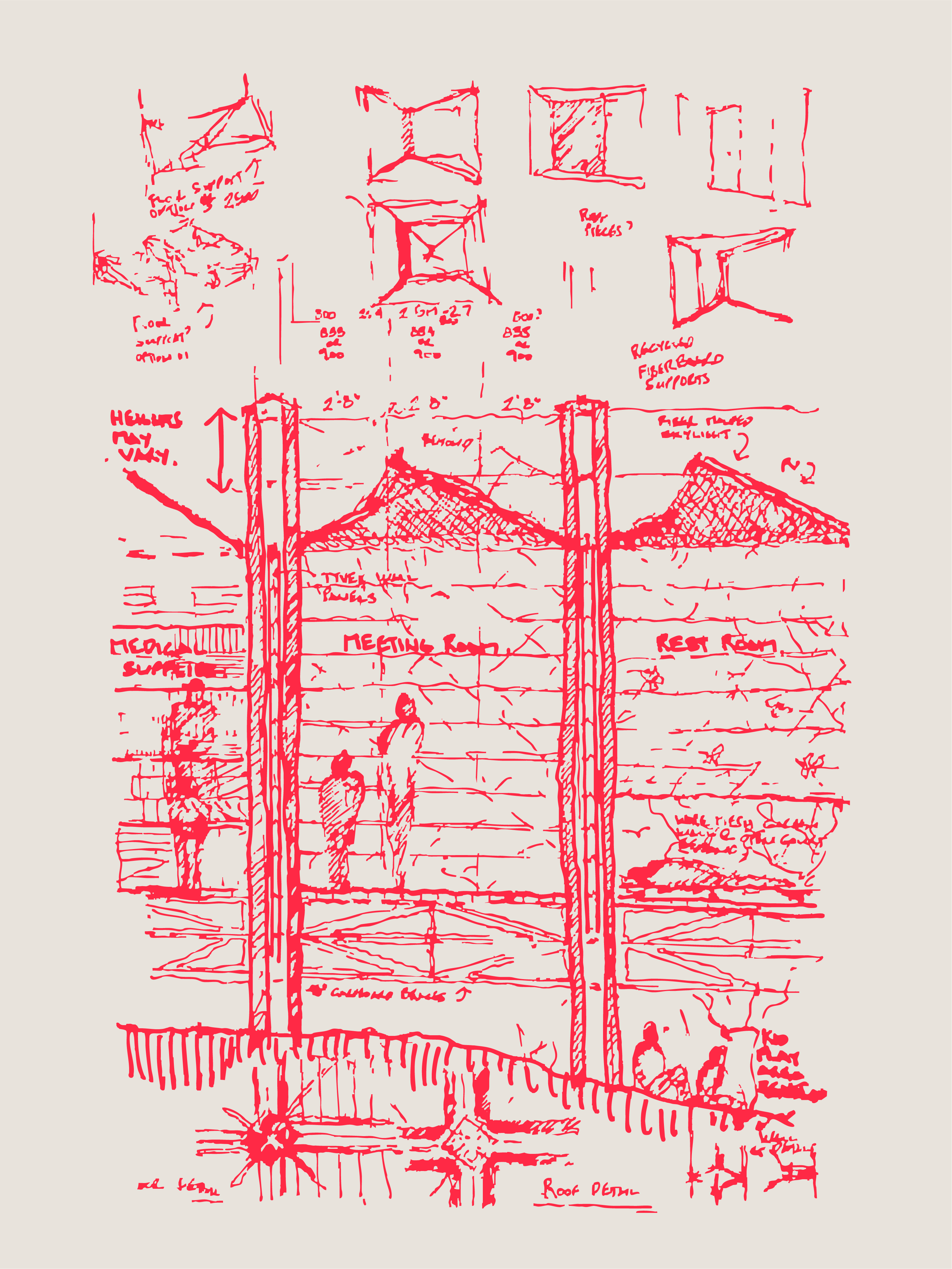
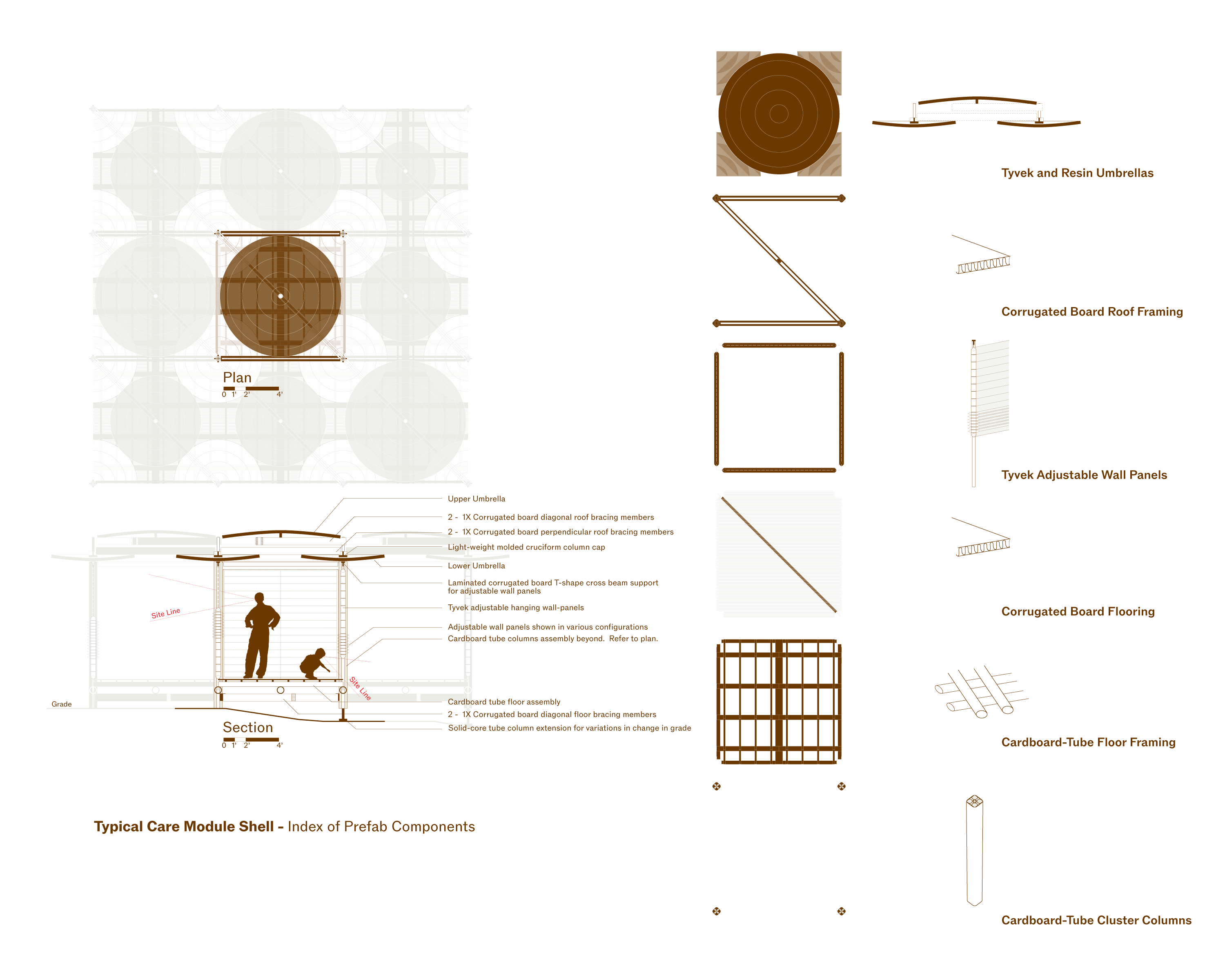
The clinic’s modular system is composed of prefabricated components designed for flexibility, low cost, and ease of assembly. Its low-tech construction approach utilizes lightweight, locally sourced materials, thereby reducing reliance on specialized tools and skilled labor. The structure strikes a balance between permanence and adaptability, providing a framework that can be repeated, modified, or relocated, enabling each clinic to respond to both site-specific and regional needs. Prefabrication accelerates deployment and minimizes waste, aligning with economic and humanitarian priorities while maintaining architectural clarity.
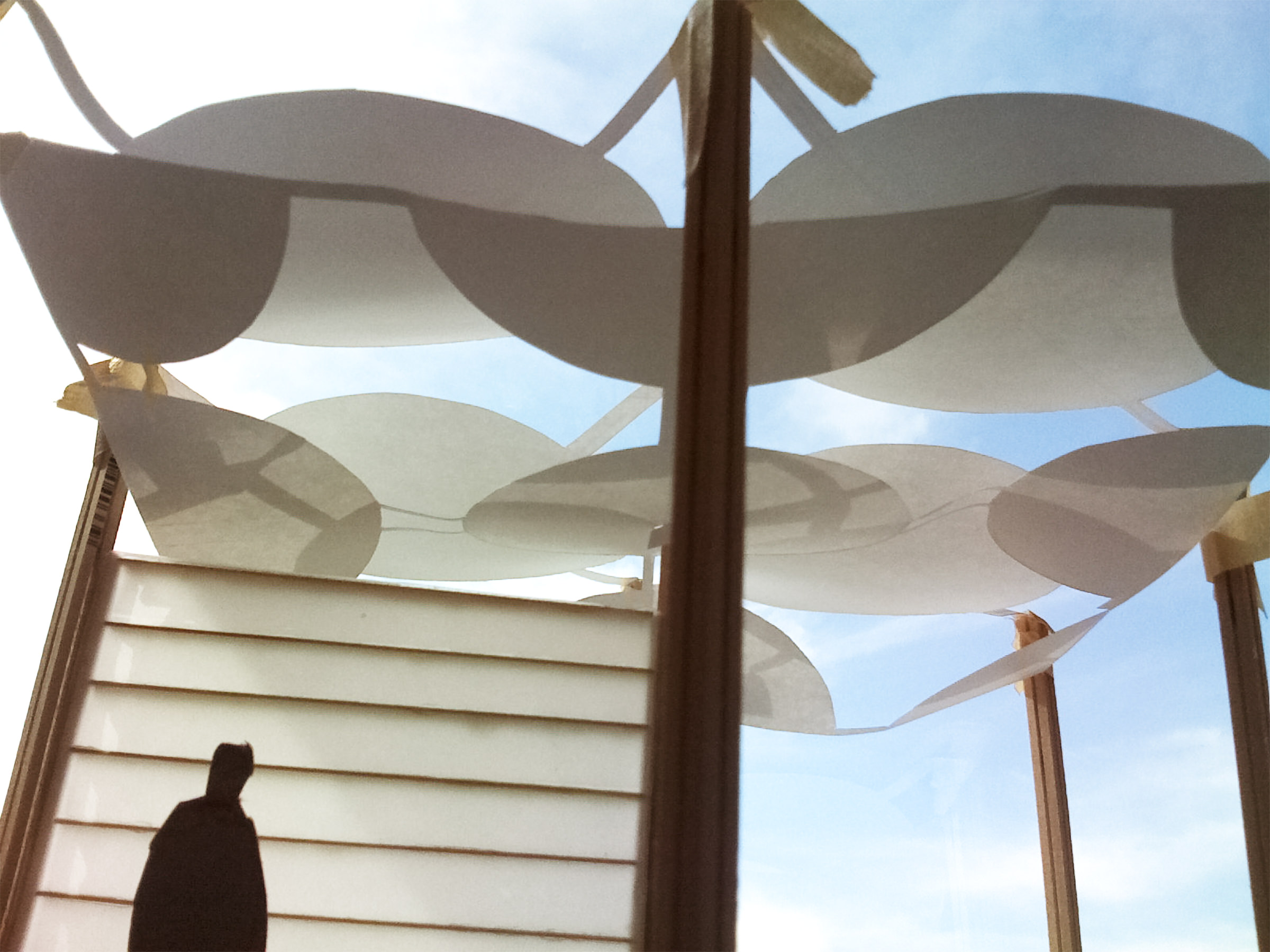
Each module contains a fixed structural frame paired with a variety of enclosure systems. These include lightweight, adjustable wall panels and a distinctive umbrella-like canopy that functions as both a shading device and an architectural marker. Together, they define a series of indoor and outdoor rooms that support treatment, play, gathering, and rest. Enclosure levels vary based on privacy, security, supervision, and climate, allowing daylight to filter throughout and a free flow of ventilation. The system scales or reconfigures in response to available resources, materials, and site constraints.
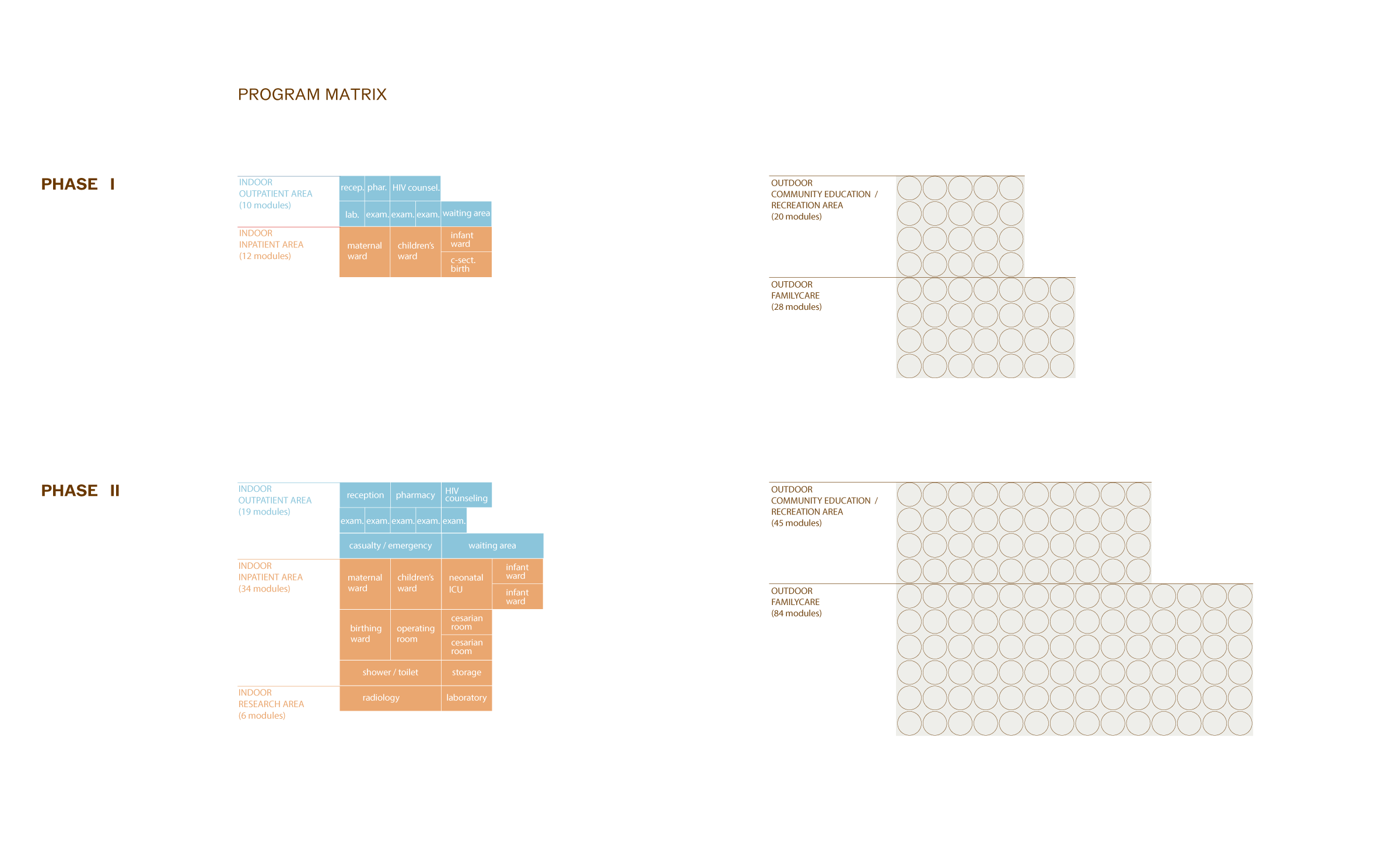
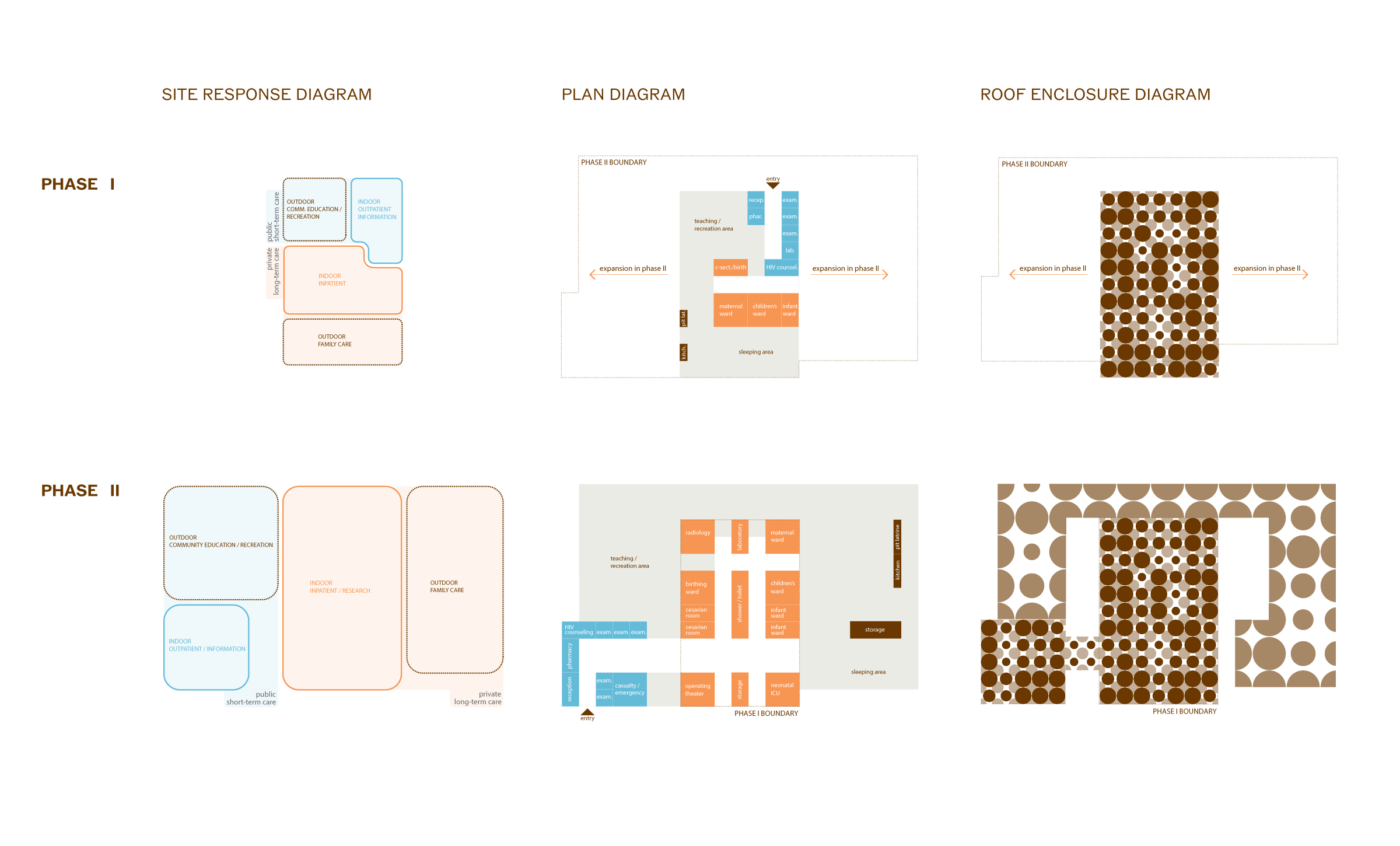
The clinic is designed as a responsive, transitional presence, providing immediate care while supporting the emergence of long-term, locally managed health systems and programs tailored to each community. Once those systems are self-sustaining, the clinic can step back. Its modular design allows for relocation, adaptation, or full disassembly and recycling. These outcomes are embedded in its material choices and construction method. In both its initial and expanded forms, it reinforces the link between health and community by dedicating open space for shared use, scaled to grow with the system it helps establish.