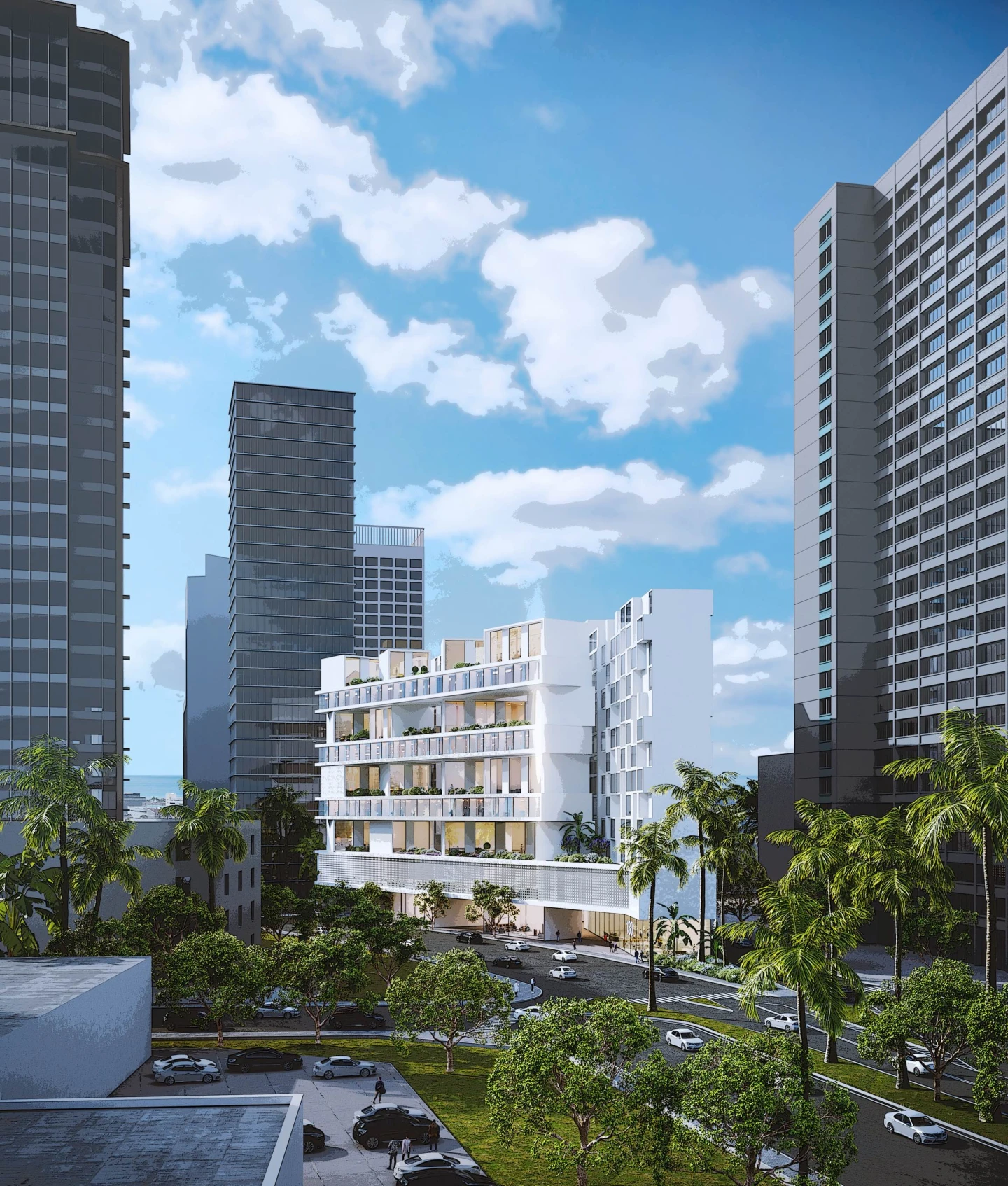
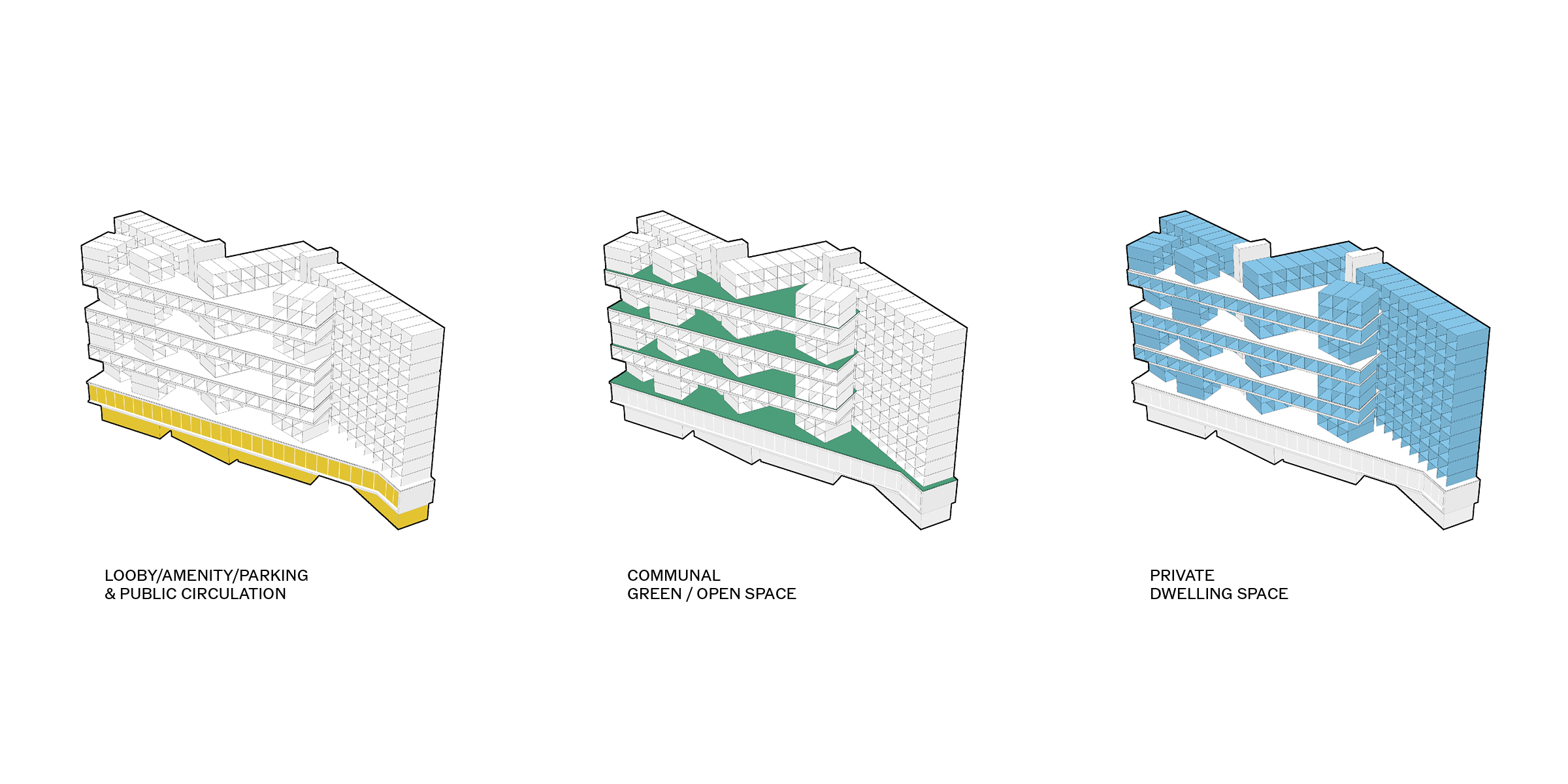
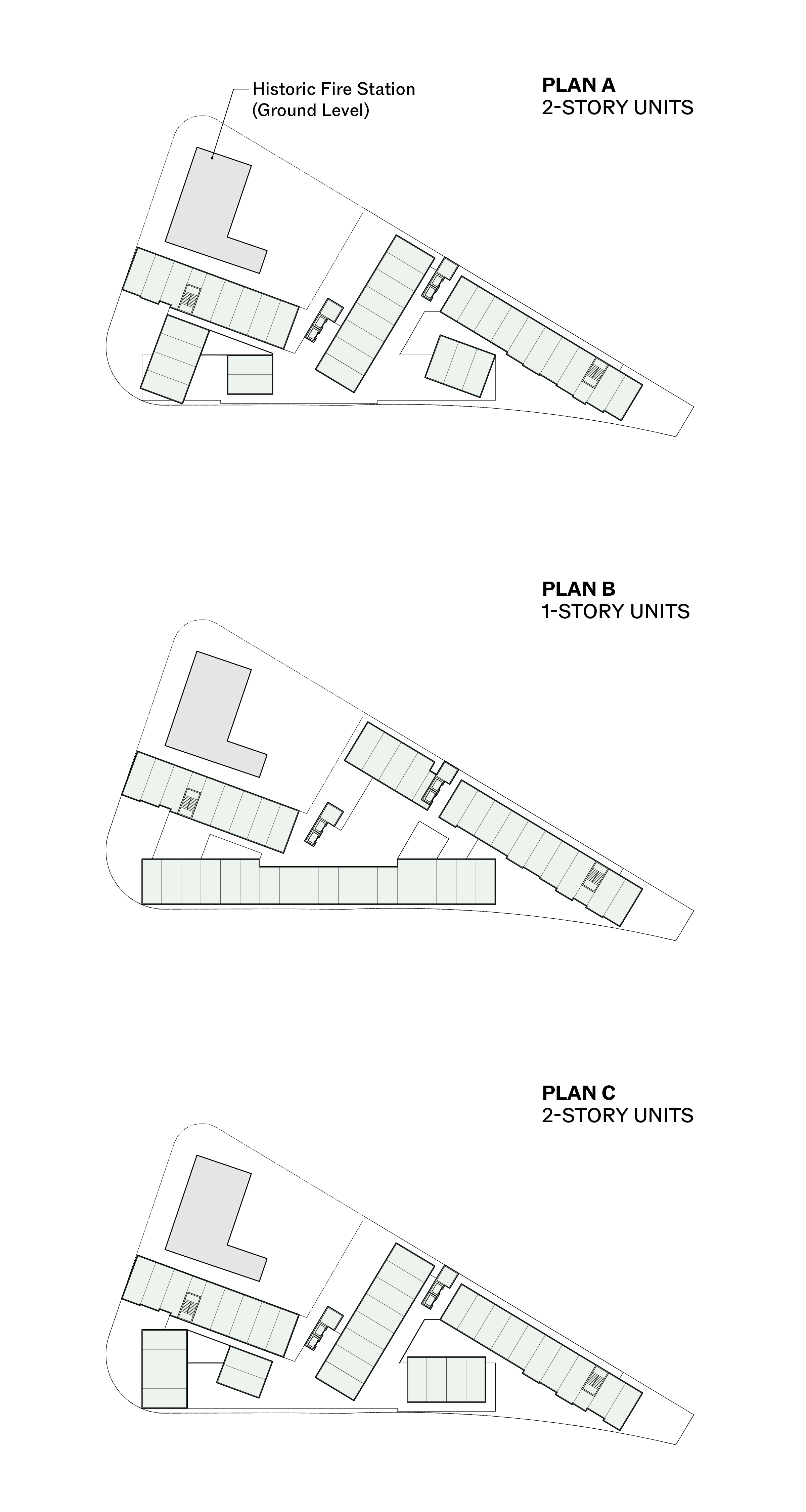
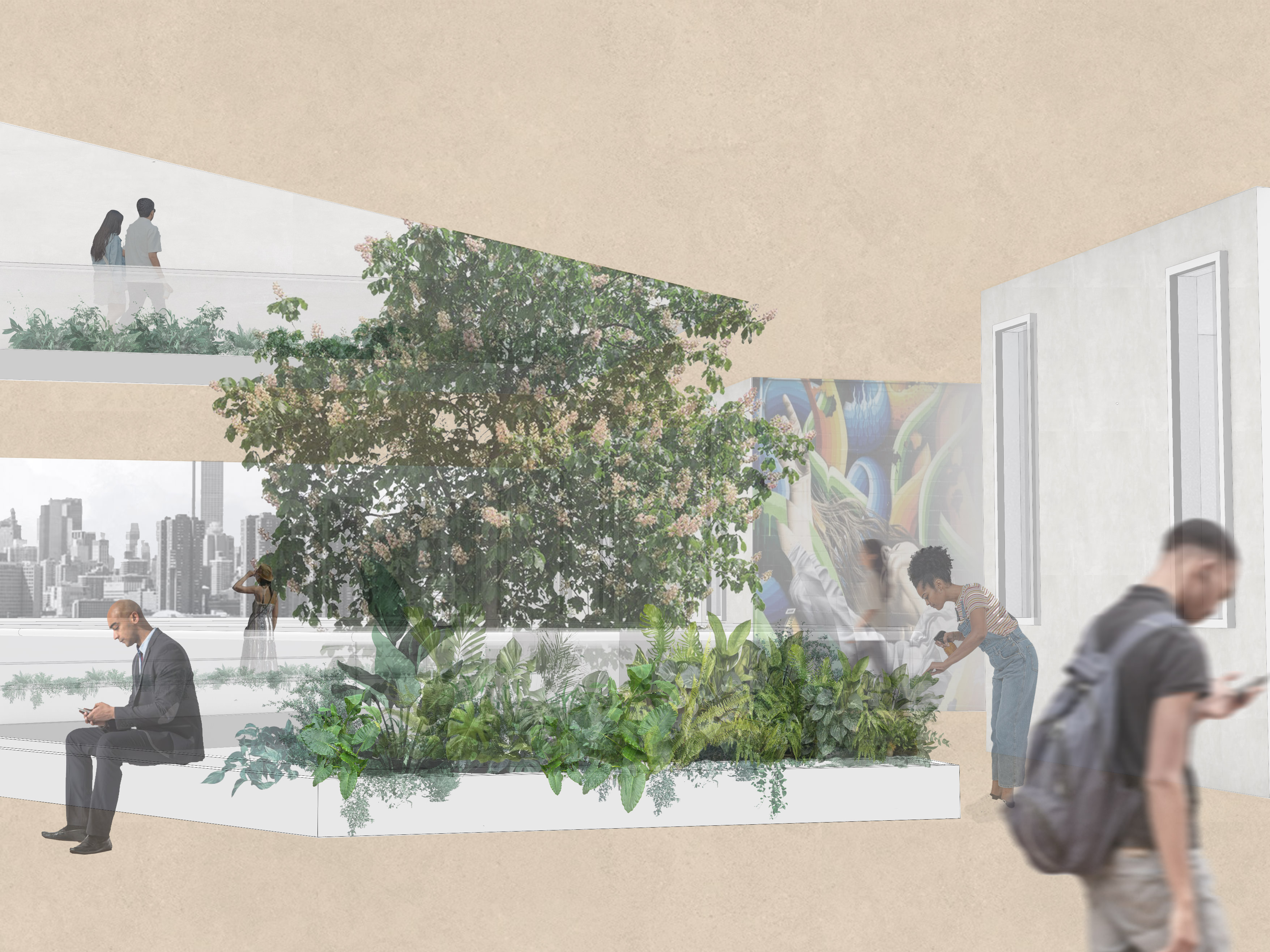
Located at the mauka edge of downtown Honolulu, 130 S. Beretania St occupies a threshold site between the city’s historic core and the ascending terrain of the Pali Highway. The design responds to this unique triangular gateway site with an intentionally arranged set of slender mid-rise residences that frame Historic Fire Station No. 1, Honolulu’s oldest firehouse. This approach preserves the visibility of the landmark Fire Station while optimizing housing density, in a new desirable address that fosters community interaction rooted in strong connections to the city. The building massing introduces a series of elevated bridges on alternating levels to link individual residences about a network of breezeways and communal lanais that capture crosswinds, provide shade, and open views toward Punchbowl Crater, downtown, and the Koʻolau mountains.
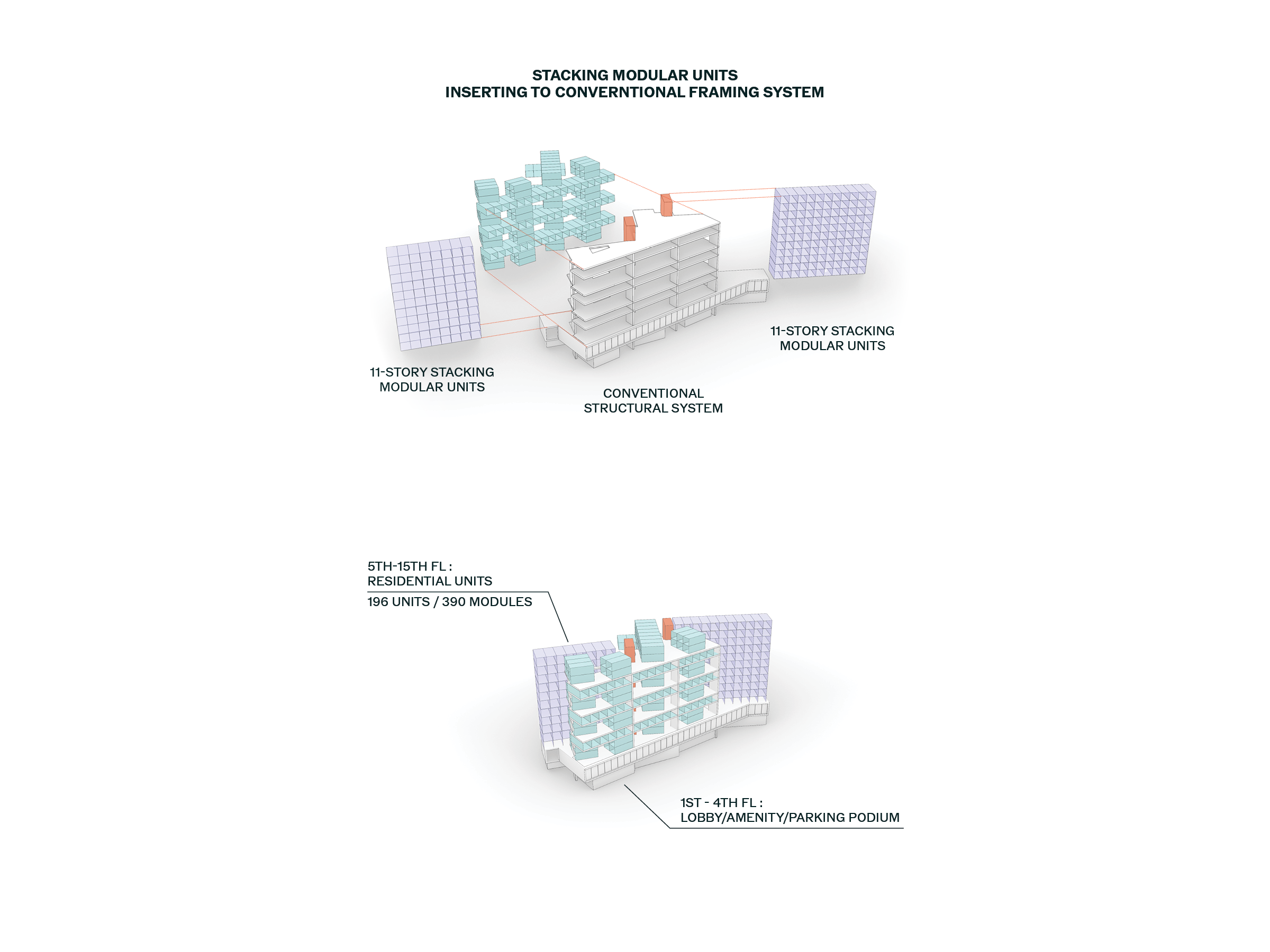
Conceived as an entry in an Affordable Housing competition, the project proposes 196 residential units organized across 360 prefabricated modules. Unit types range from one to three bedrooms, offering floor plans between 600 and 1,200 square feet. The design concept utilizes a conventional structural frame to support standardized pre-fabricated modular construction. Each module is composed of repeatable components for living, sleeping, and service spaces, allowing for variation in layout while maintaining consistency in fabrication. The modular strategy enables efficient and flexible stacking parameters while optimizing efficiencies in transport, spatial adaptability, and construction speed. A four-story podium houses parking, the main lobby, and resident amenities, creating a base that engages street access and supports the residential mass above.
At both the building and site scale, 130 S. Beretania St establishes itself as a visible residential gateway to downtown Honolulu and a recognized anchor of the Fort Street pedestrian walkway, which traverses the city’s core. The design balances technical efficiency with contextual sensitivity, and offers a model for urban housing that is both scalable and responsive to the needs of urban Honolulu. Framed by mountains and sea, the building opens a threshold where city life meets the natural rhythm of the islands.