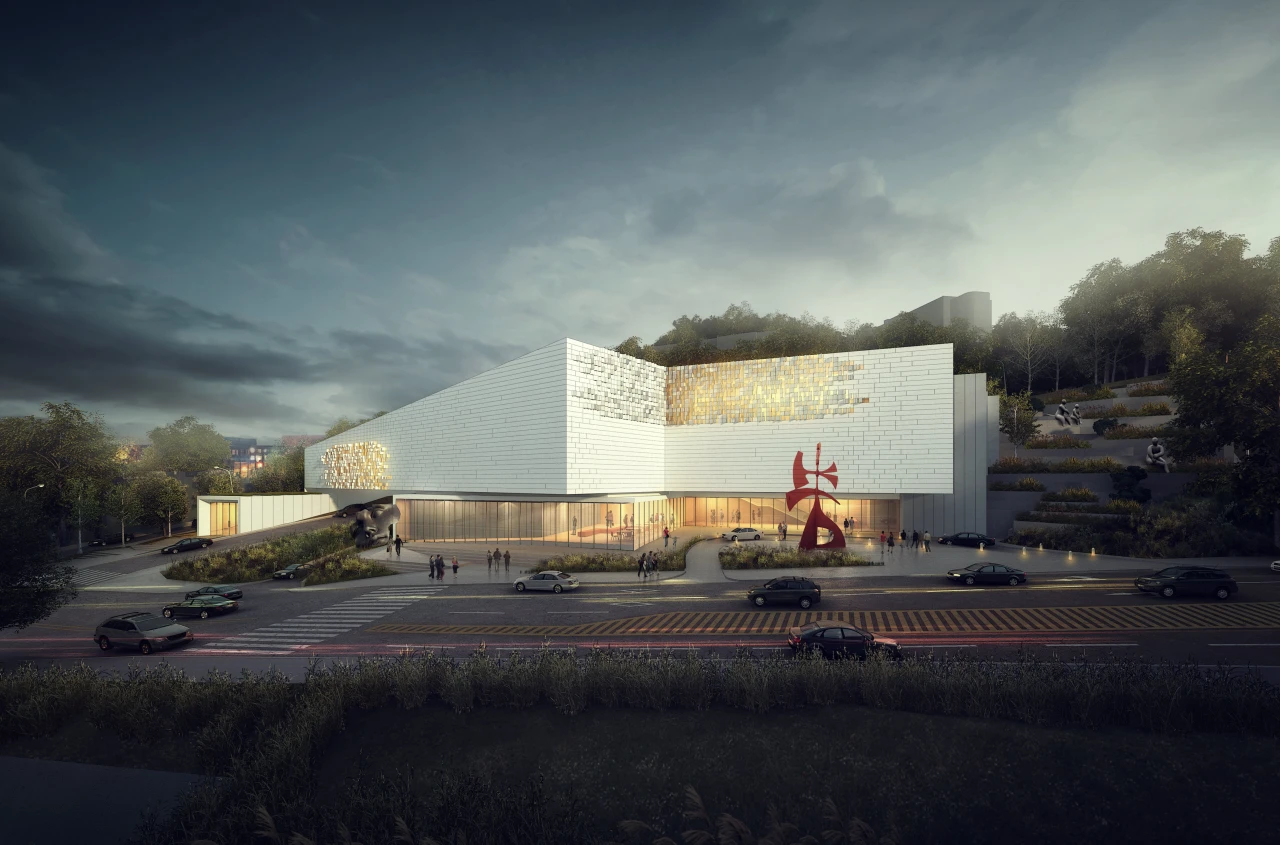
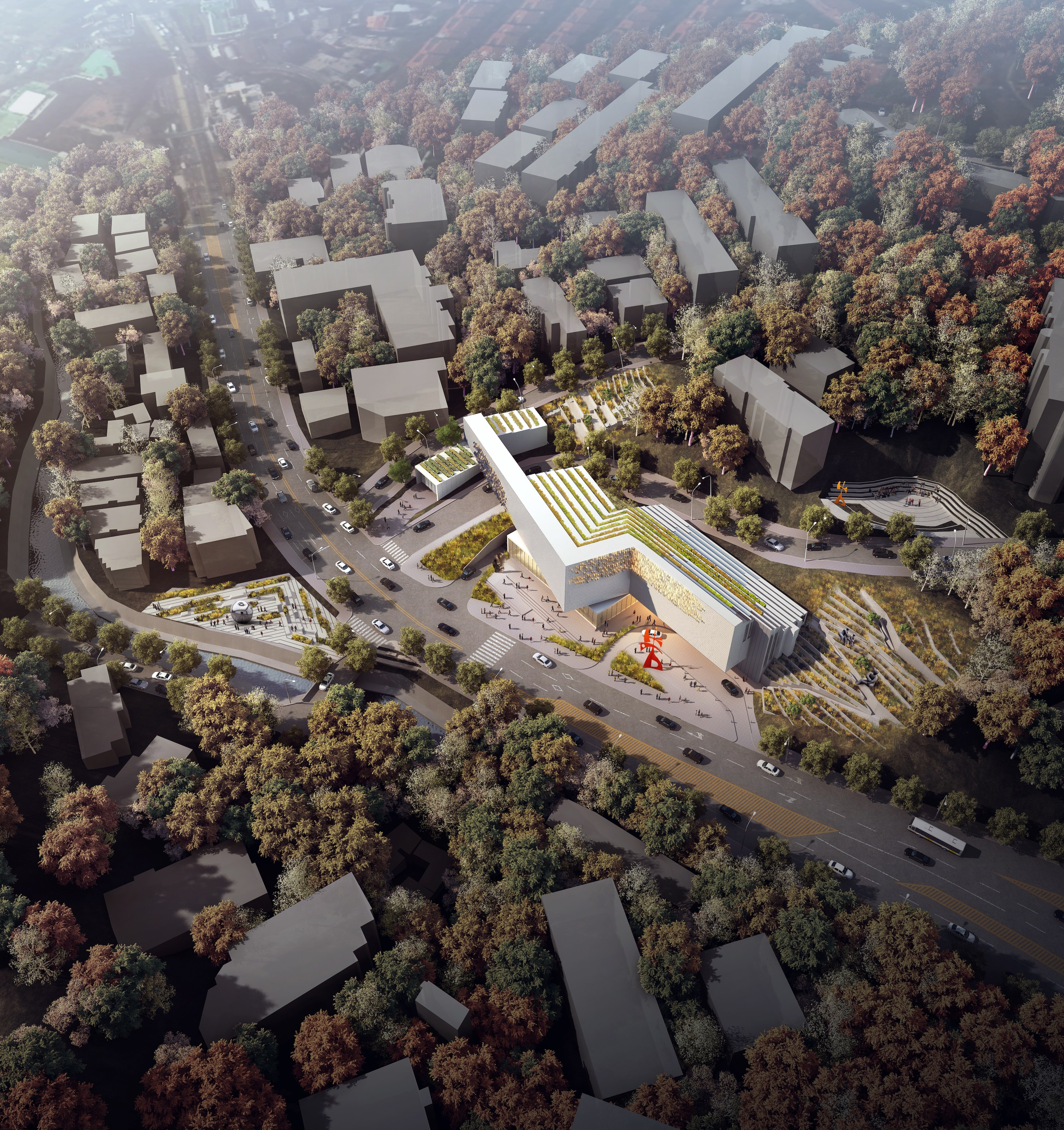
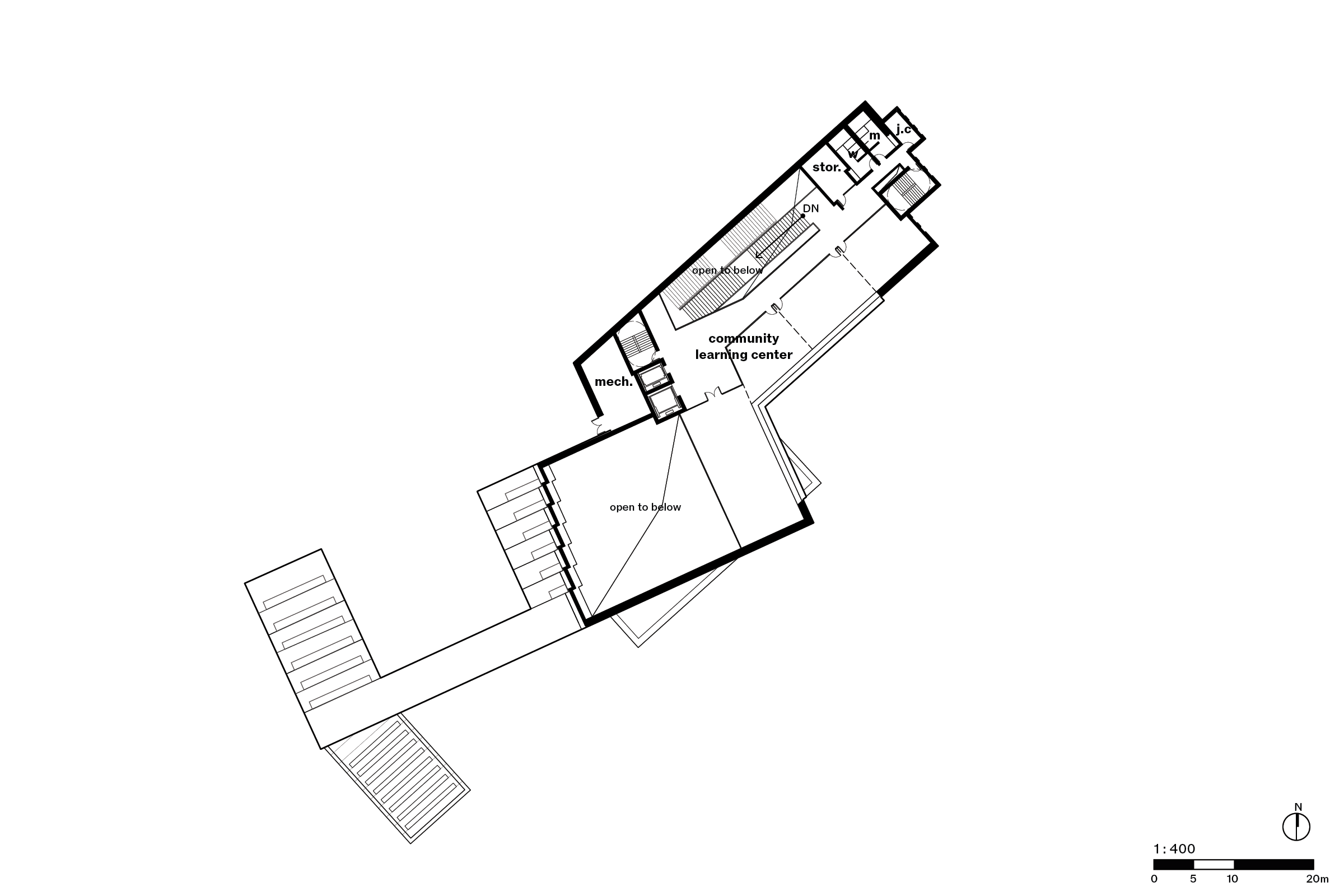
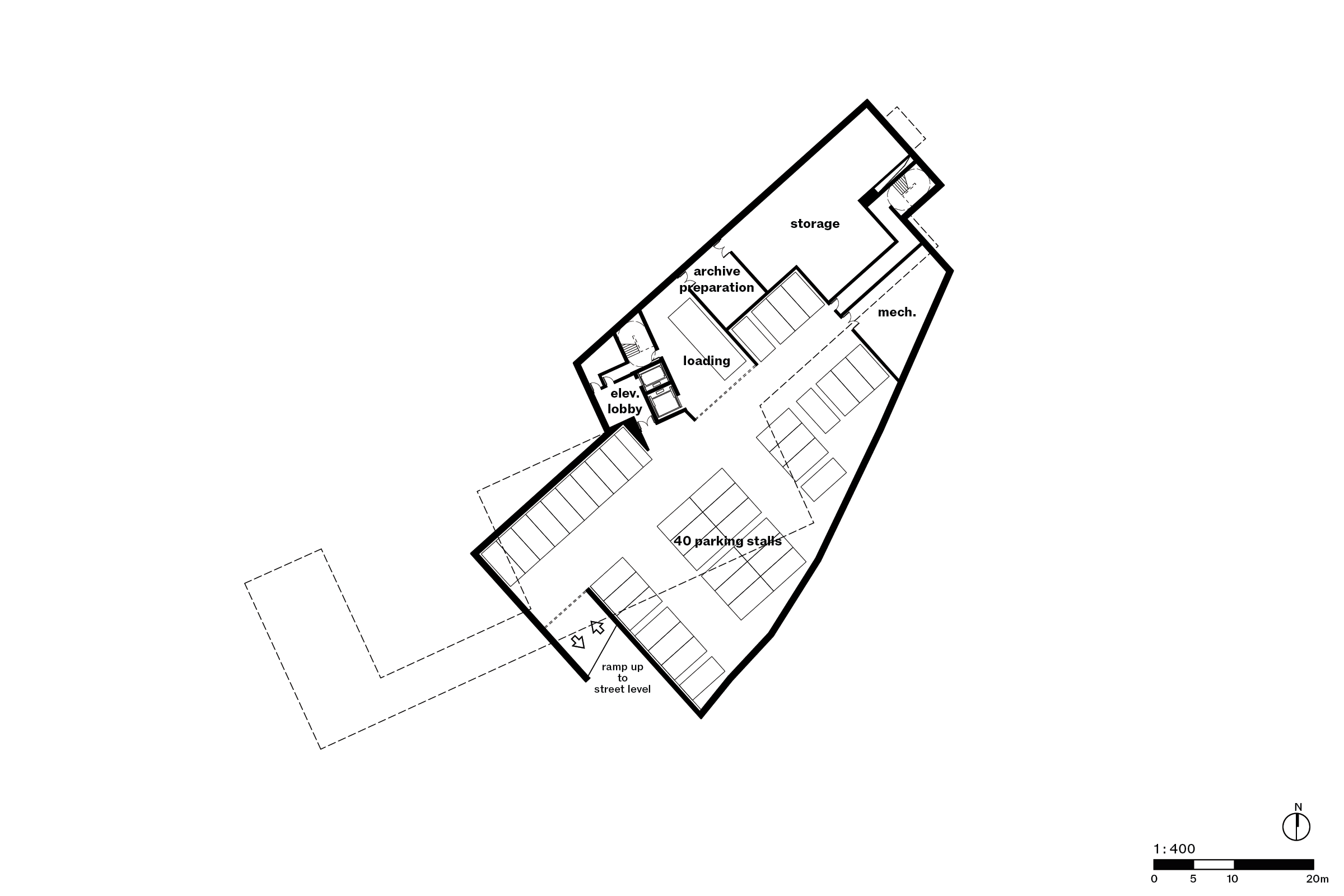
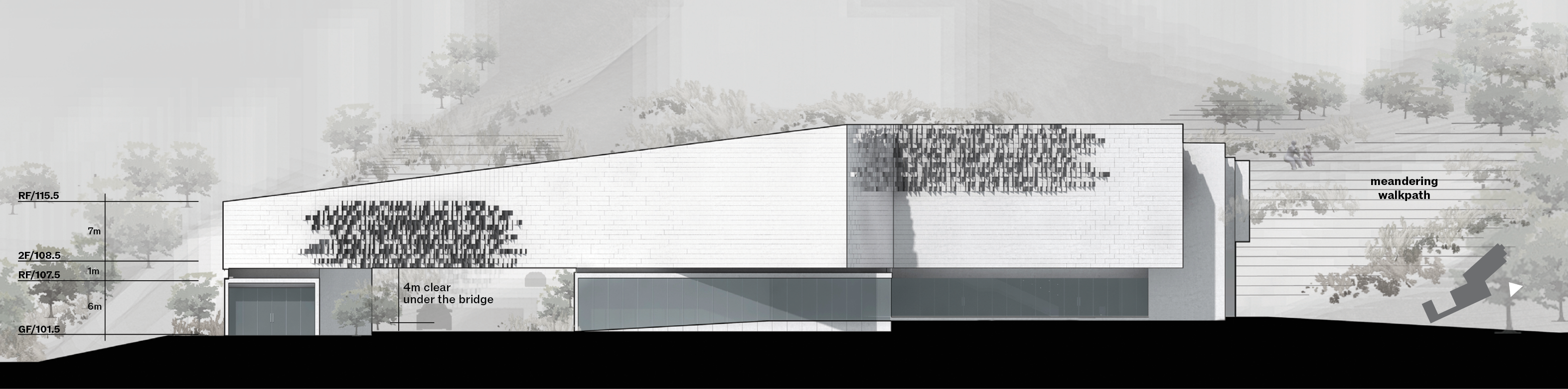
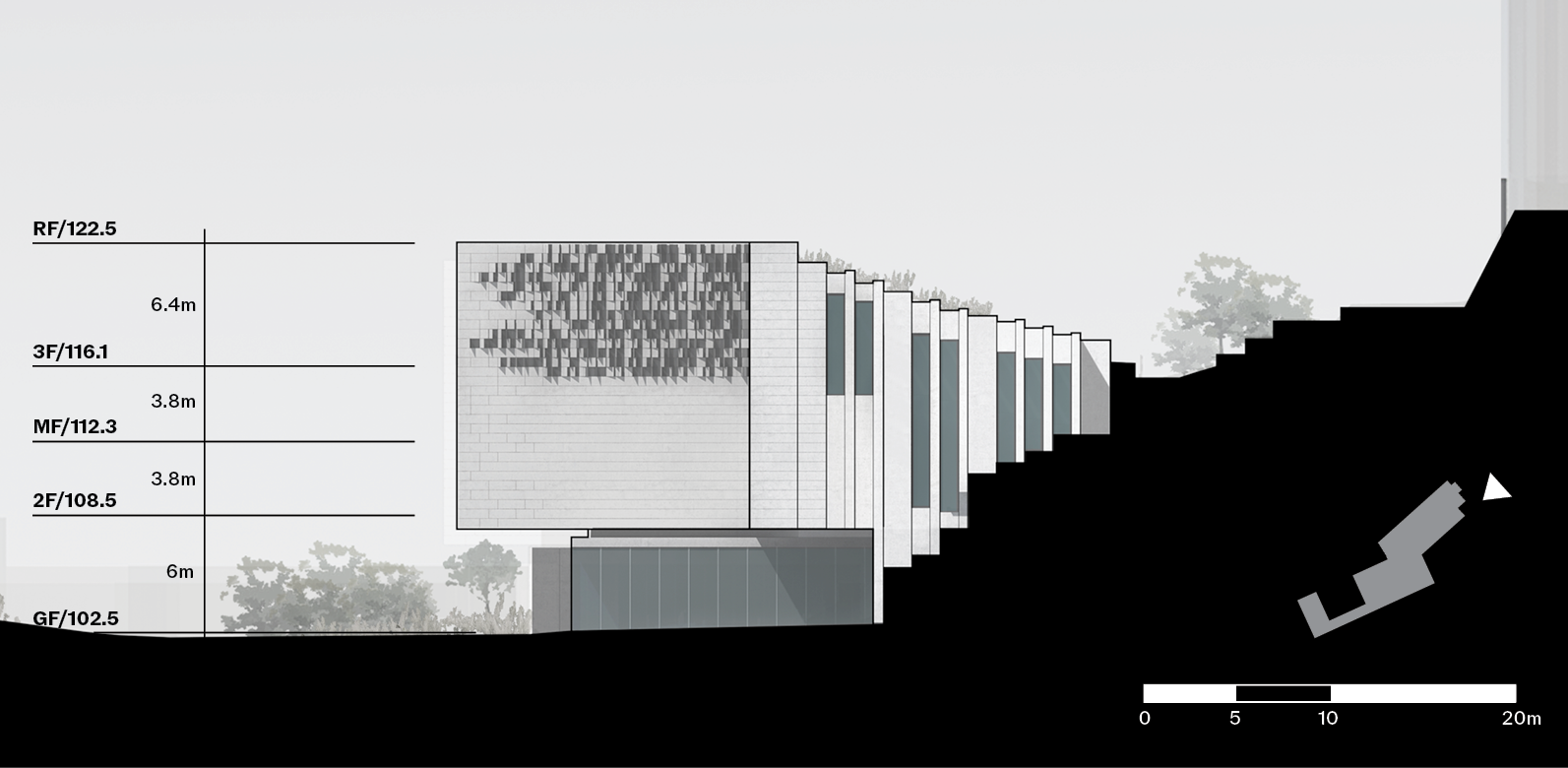
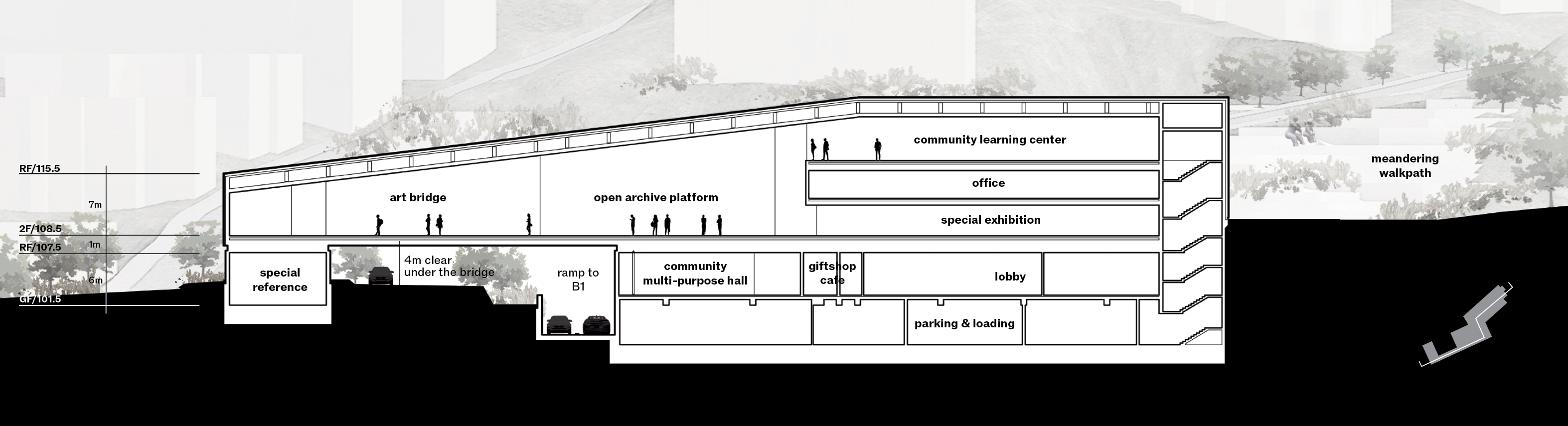
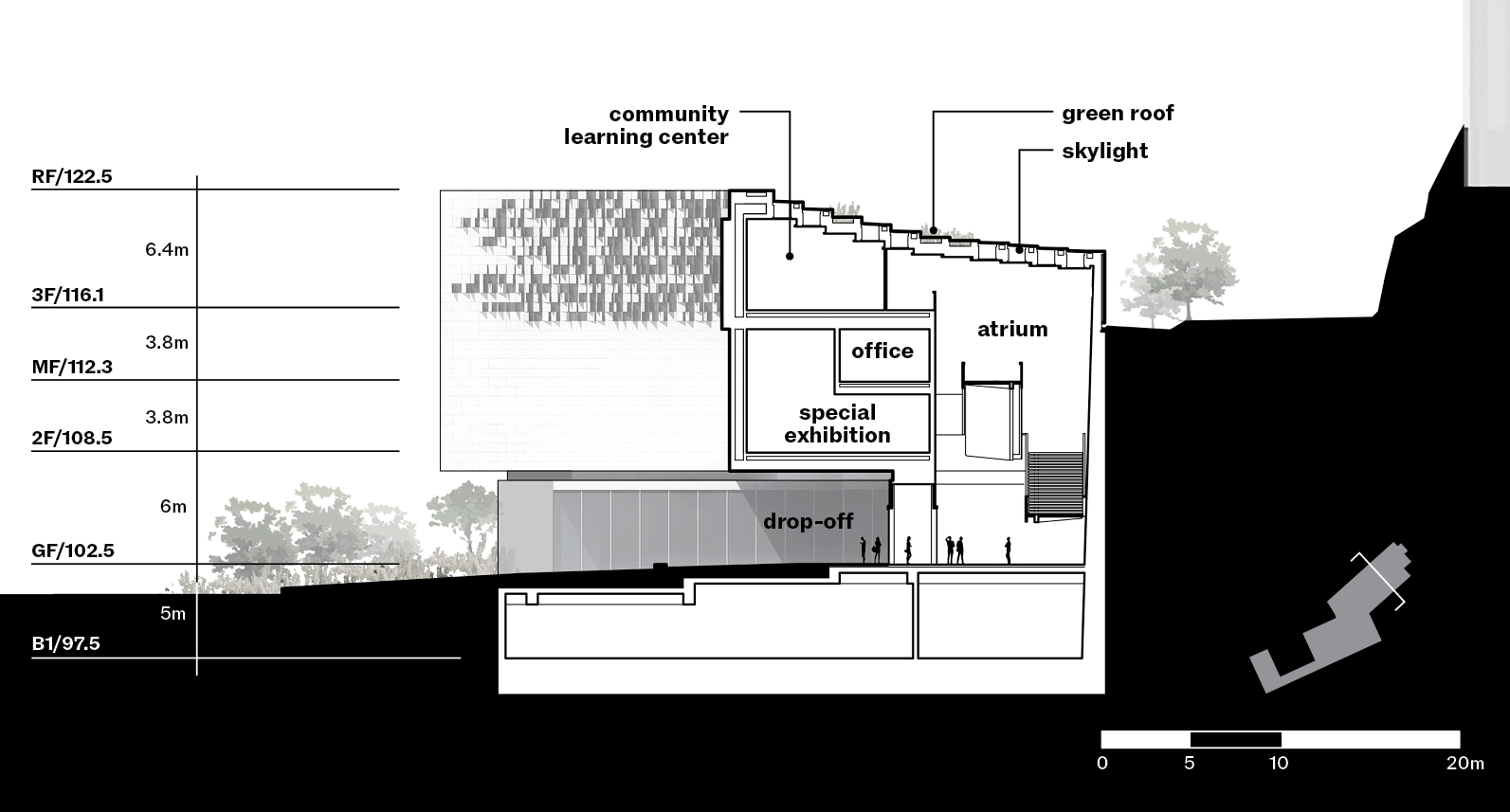
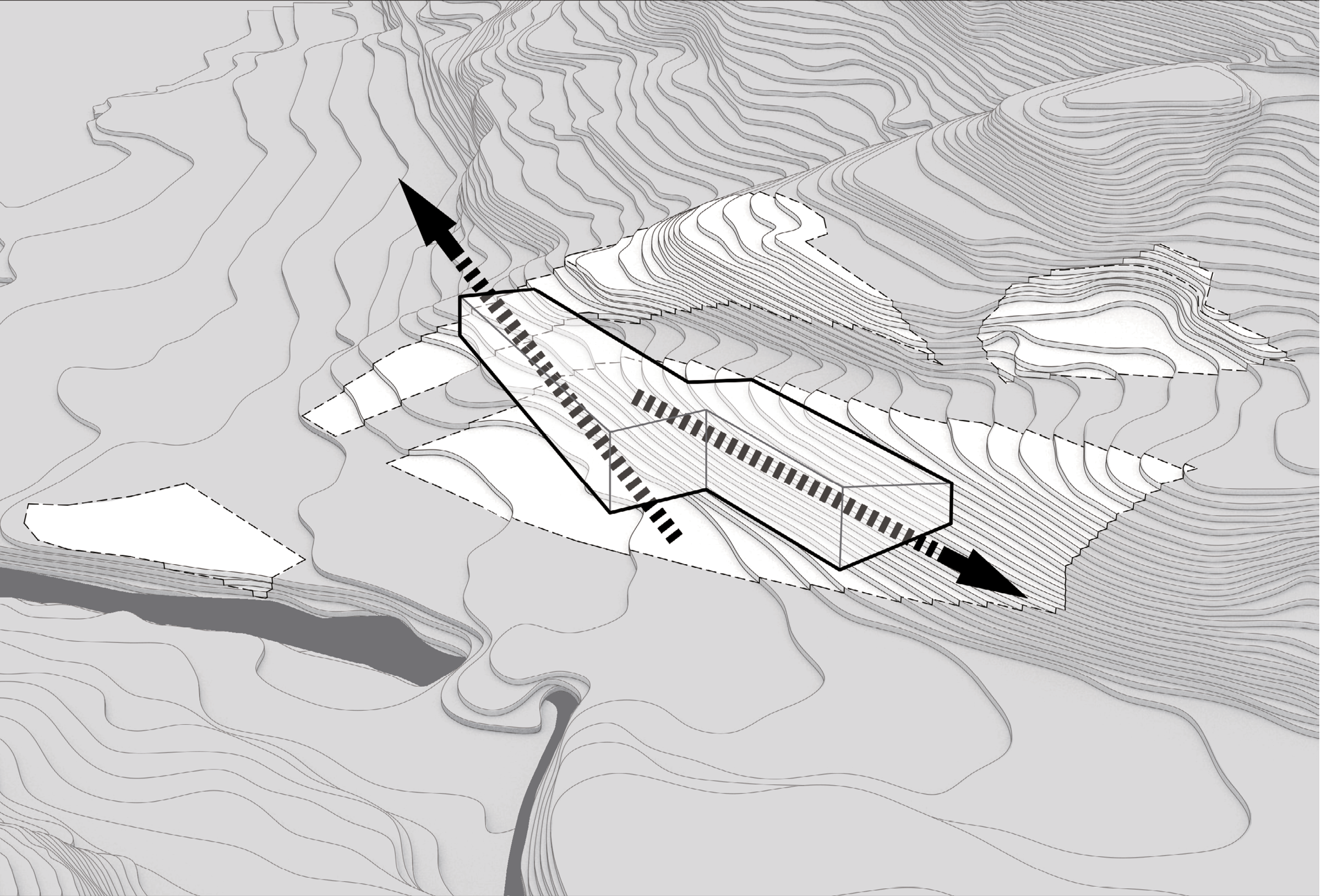
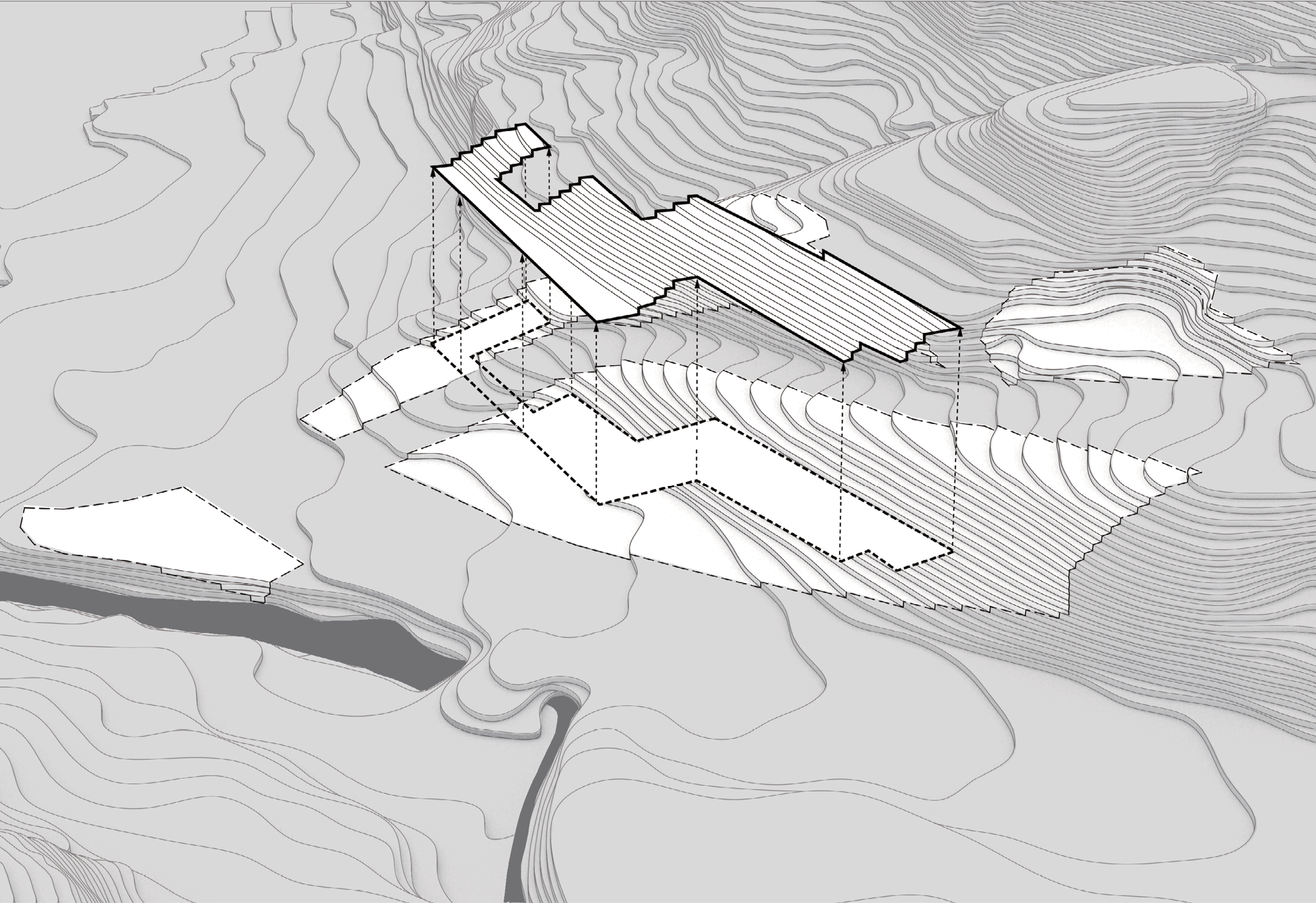
Influenced by the slopes of Bukhan-san and Bugak-san, the Seoul Museum engages a site where nature, city, and cultural memory converge. The design is derived from this hillside site by use of stepped, angular forms that trace the terrain while establishing a distinct civic presence along Pyeongchangmunhwa-ro. In this way, the building’s terraced roofline extends naturally from the slope in a series of steps that cascade toward the street, forming an urban edge that integrates with the adjacent street frontage. The resulting form is embedded in the landscape on one side and fully open to the city on the other—a dual condition that defines it as both landmark and connector.
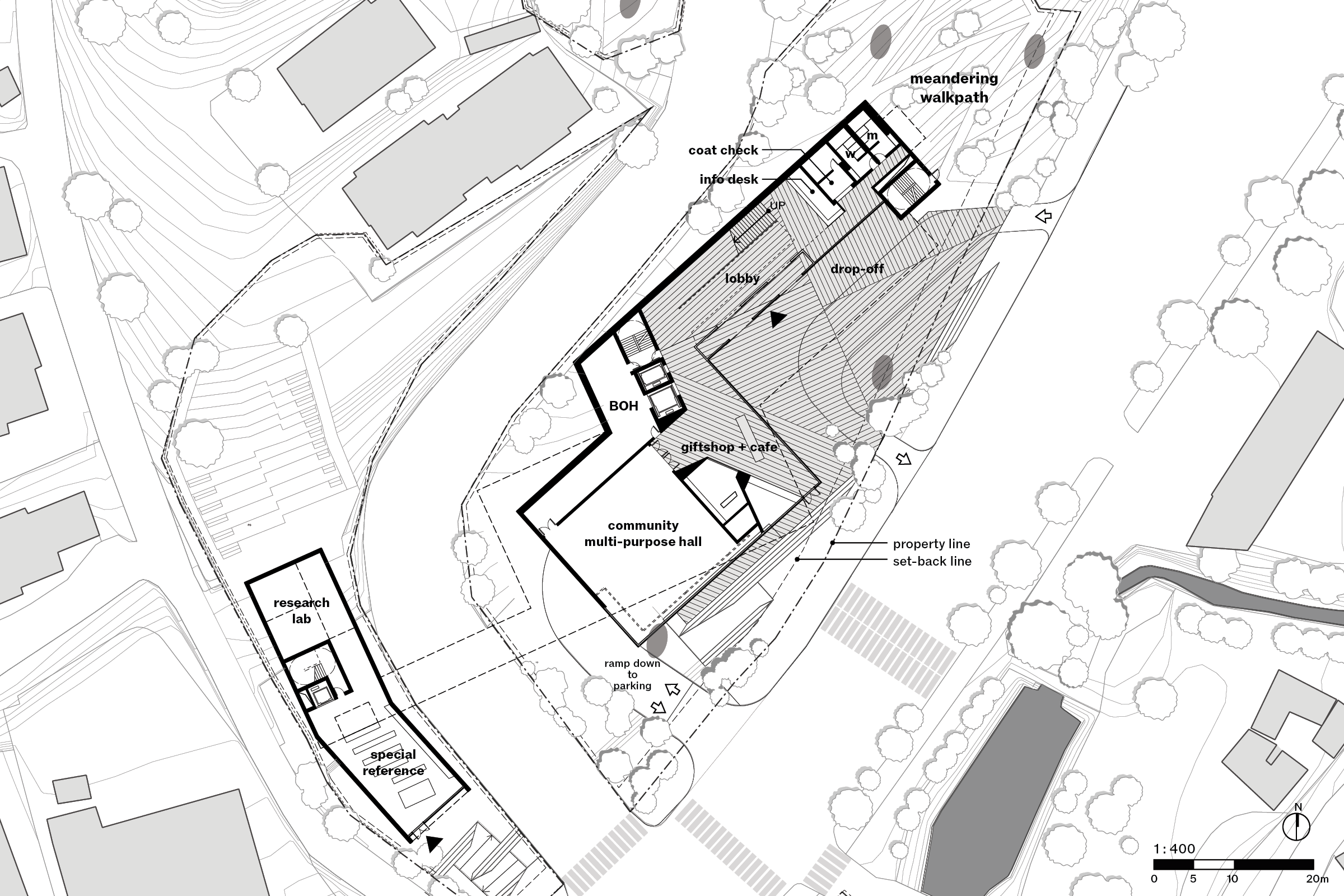
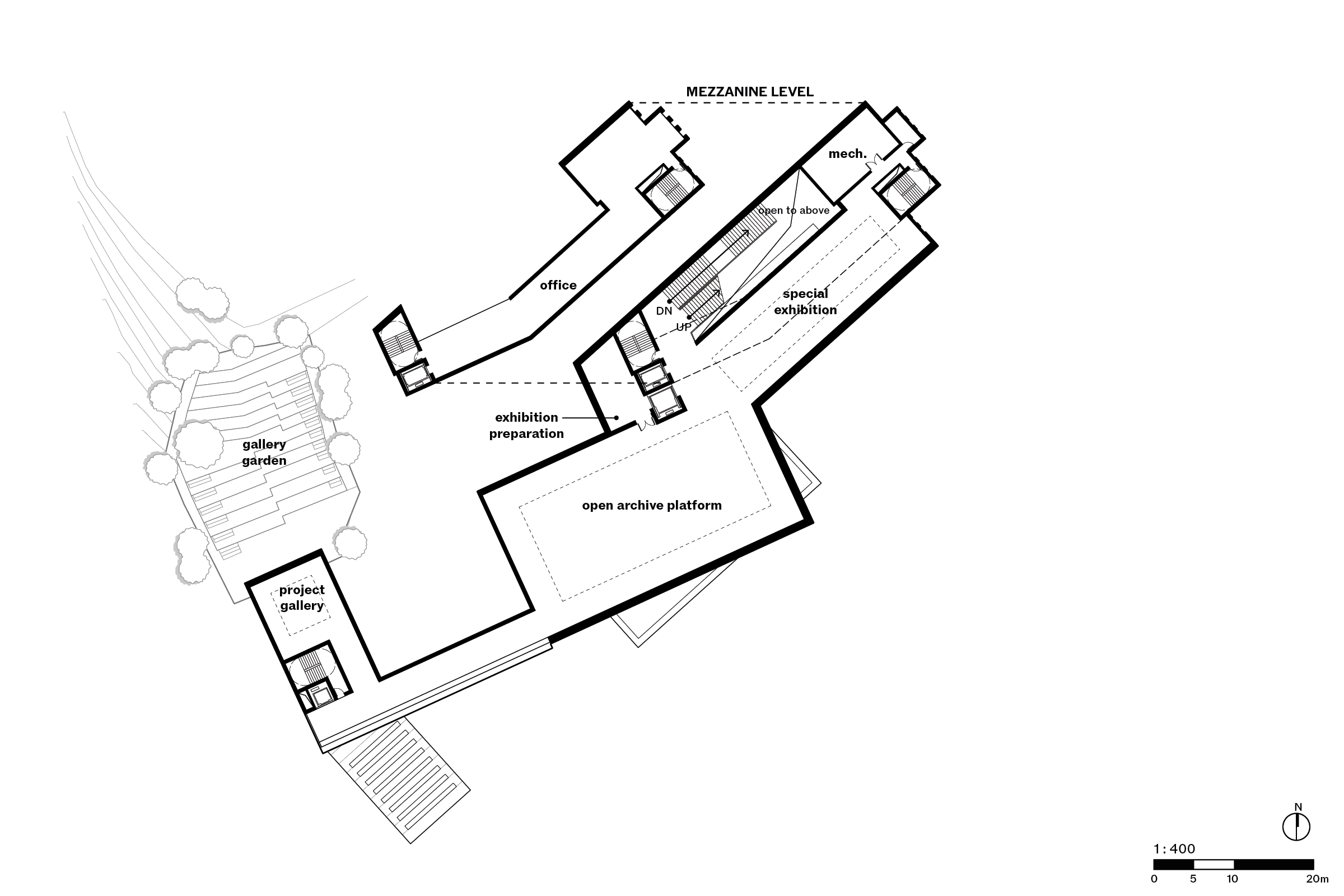
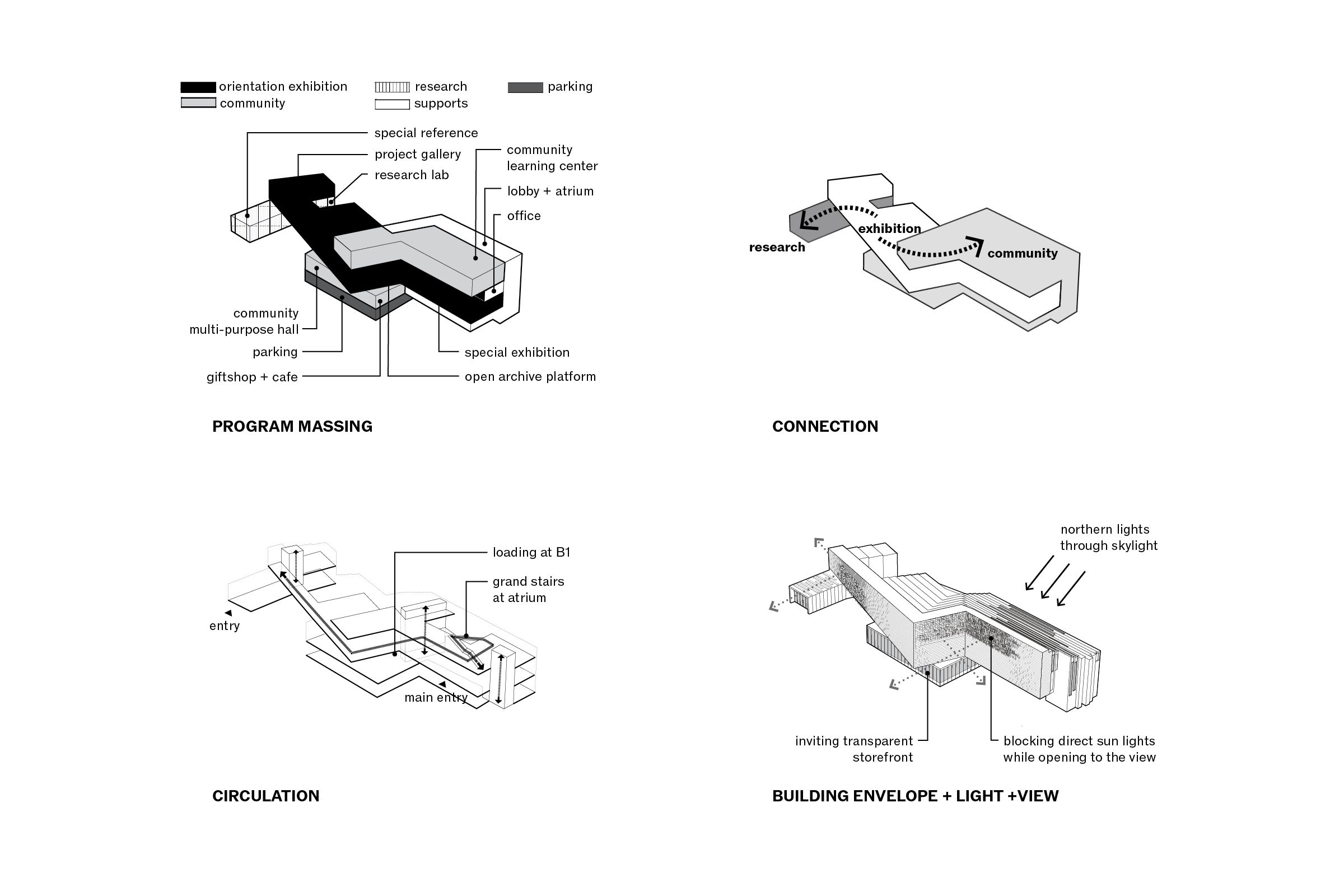
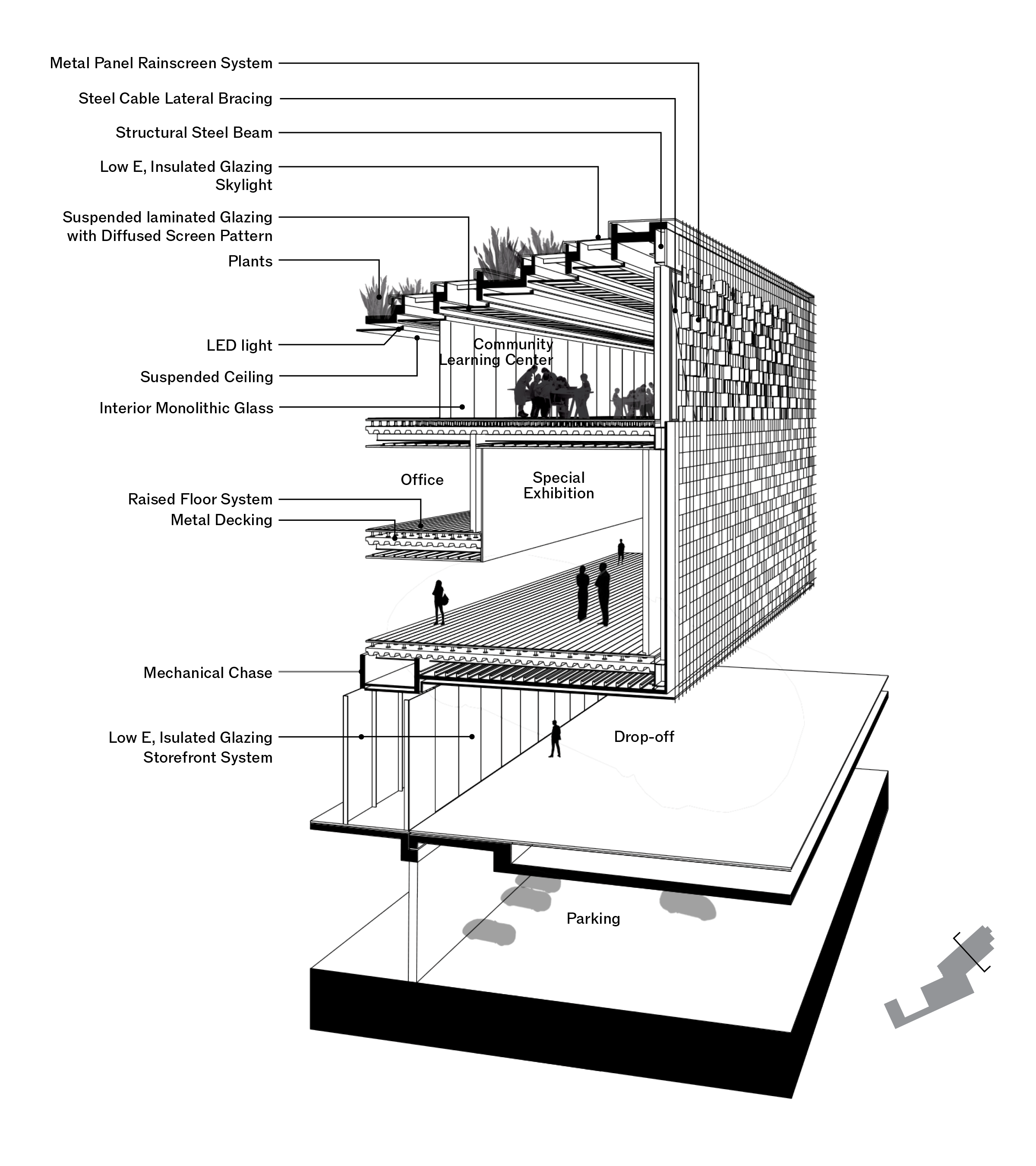
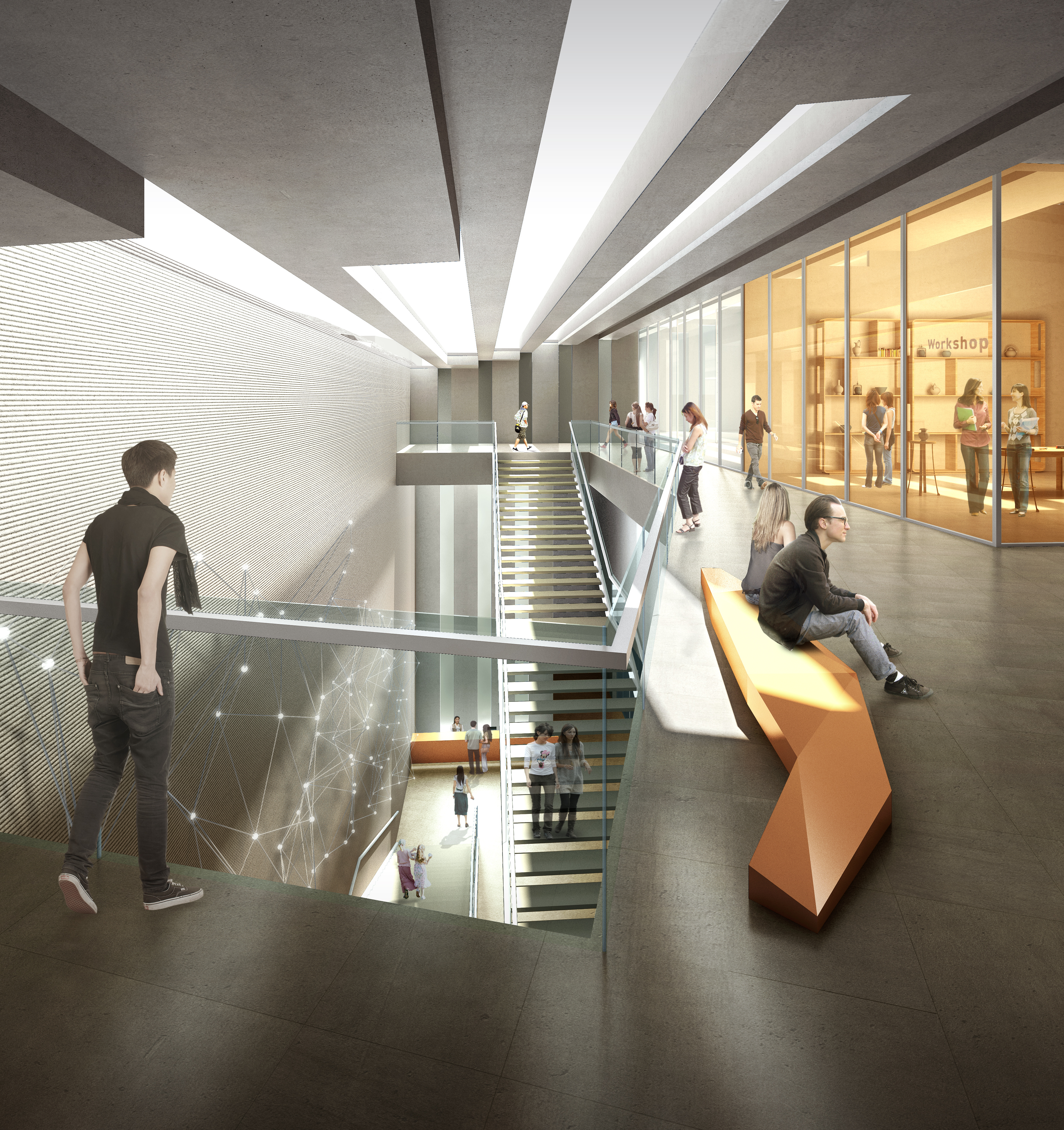
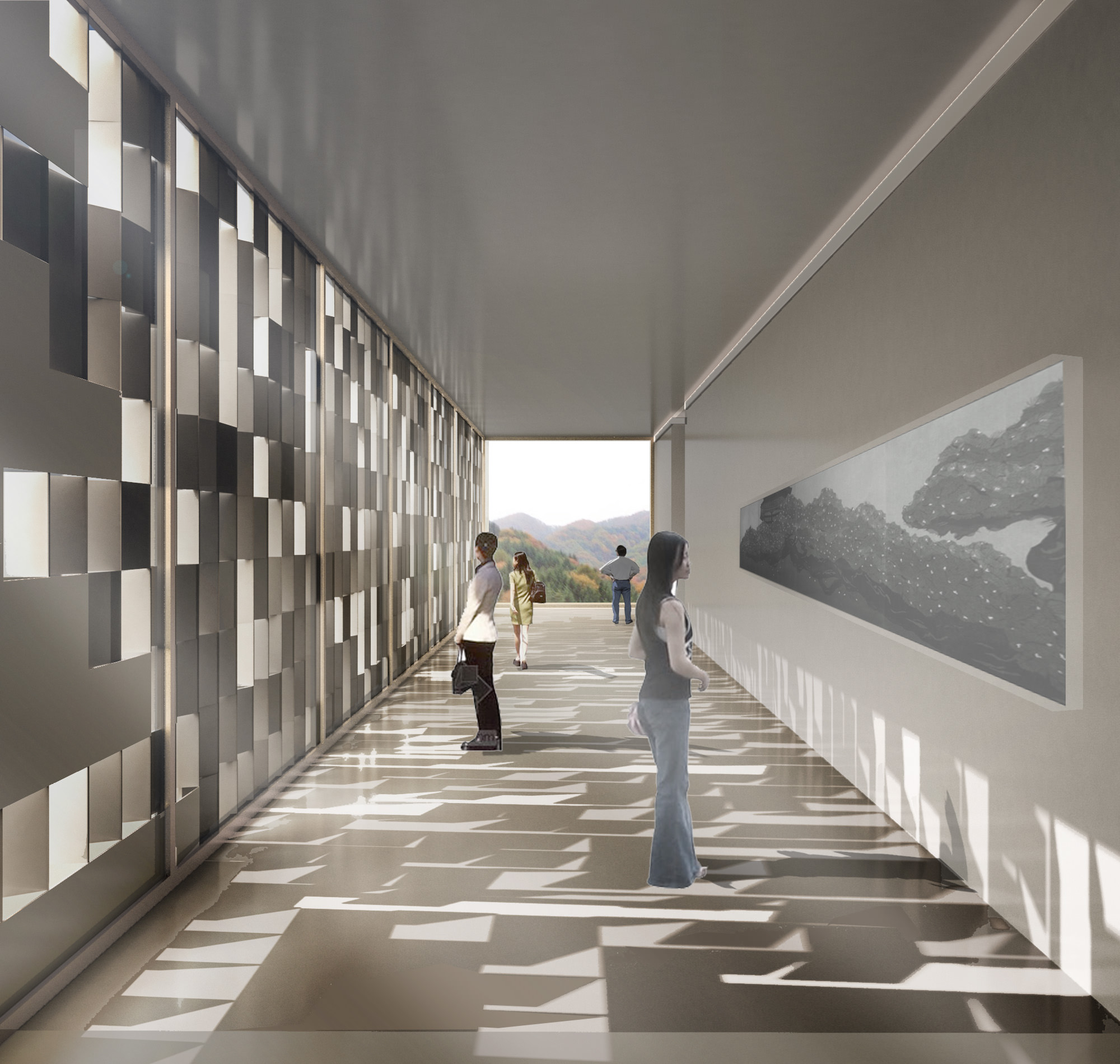
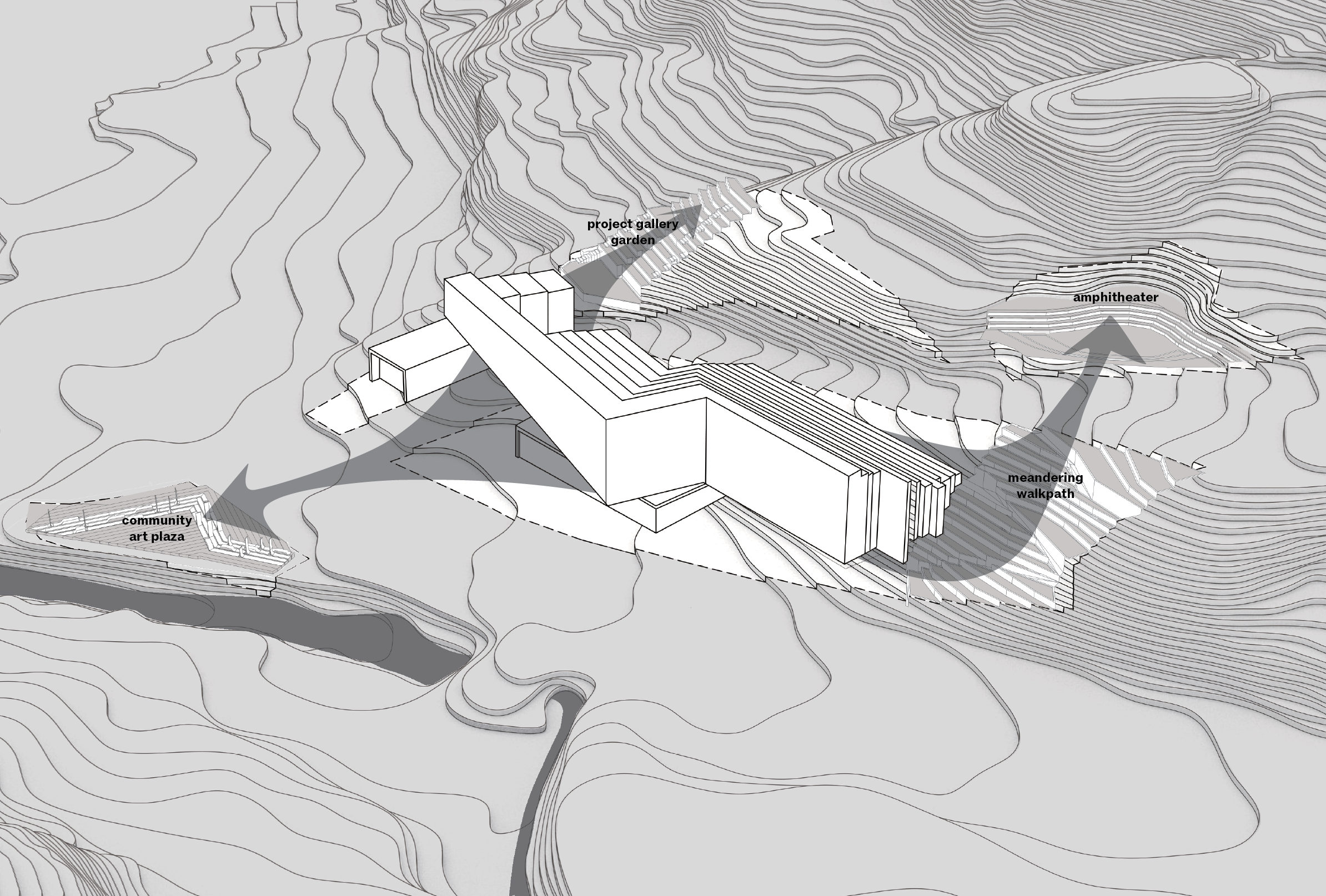
Circulation across the site unfolds as a continuous, intertwined spatial sequence. Outdoor walkways and bridges link galleries, learning spaces, and research areas while extending into a broader network of public paths and amenities. A vertical atrium introduces daylight into the center of the building and orients movement across multiple levels. Throughout the museum, light acts as both material and atmosphere, animating surfaces and guiding movements and spatial transitions throughout the day.
Beyond the primary building, the project incorporates a streamside plaza and an elevated amphitheater, extending the museum’s civic presence into the surrounding landscape. These spaces offer platforms for social gathering, performance, and exchange, reinforcing the museum’s presence within the everyday life of Pyeongchang-dong. Together, they expand the museum’s function beyond exhibition, positioning it as a cultural and spatial anchor within the district. Seoul Museum is designed to grow with its context, accommodating changing programs, seasonal use, and the evolving relationship between art, place, and public life.